- Sewing Tutorials How to Add a Lining to Any Sewing Pattern (Even When the Pattern Doesn't Include One) If you're working on a sleeveless garment without button closures, the burrito method creates the cleanest possible finish by essentially rolling the fabric out of the way as you work September 26, 2025
- Sewing Tutorials How to do the Burrito Method on a Lined Yoke The burrito method is a little bit of sewing magic when sewing certain kinds of linings. What’s the burrito method? January 16, 2023
- Sewing Tutorials How to do the Burrito Method on a Sleeveless Garment In part 2 of the burrito method series, we’ll show you how to use this technique on a sleeveless garment. January 23, 2023
- Sewing Tutorials How to Sew a Lining Using the Burrito Method The burrito method is easy when you follow these steps. ... The " burrito method" may seem complicated, but once you learn how to do it, it'll feel like magic! November 20, 2020
- Sewing Tutorials Seamwork's Best Sewing Techniques How to do the Burrito Method on a Lined Yoke: Use this sewing magic trick to get a clean finish on lined yokes. November 14, 2024

Kitchen work is all about proportions: sometimes the recipe is for four servings but you need six; maybe the recipe calls for 80 g of butter but you only have 57 g, so you have to adjust the other ingredients to match.
We could use an electronic calculator to figure out the rescaled amounts, but a slide rule makes it so much easier. The picture above was taken while following a recipe that called for 2 tsp of baking powder, and I wanted to make as large a batch as I could given the remaining 3.3 tsp of baking powder I had – a proportion of 2:3.3. You can see the slide rule is set to a proportion of 2:3.3 because – if you open the image in a new tab to make it larger – the number 2 on the C scale (on the bottom of the sliding middle part) is above 3.3 on the D scale just below.
But wait, the number 1 on the C scale is also just above 1.65 on the D scale. And 14 (or, if you will, 1.4, since with slide rules we ignore decimal points) on the C scale is above 23.1 on the D scale. Indeed. It’s set to those proportions too, because they are the same proportion. This is what makes the slide rule so powerful.
Once the slide rule is set to the constraining proportion, in this case 2:3.3, we can instantly read off all other amounts from it with no additional manipulation. If the recipe calls for three cups of flour, we’ll find 3 on the C scale and look what’s below it on the D scale: seems like we need 4.95 cups of flour. The recipe says 25 g of butter: we’ll take what’s under 25 on the C scale, i.e. 41.25 g. Having set the slide rule once, it then serves as a custom scaling table for the rest of the recipe.
Kitchen work is all about proportions, and nothing beats the slide rule for proportions. The reason I write this article is I just found myself in someone else’s kitchen and they didn’t have a slide rule. Only then did I realise how much I take my kitchen slide rule for granted.
Bakers understand the importance of proportions in cooking; they even write their recipes normalised to the weight of flour, meaning all other ingredients are given in proportion to the amount of flour. This makes it easier to compare recipes, too, because when they are normalised to the weight of a common ingredient, it is easier to see which recipe is sweeter, saltier, umamier, etc.
We can use the slide rule to scale recipes while cooking, but we can also use it when learning to cook something new, by taking a hint from the bakers. We look at multiple recipes and – using the slide rule – write up a table with the relative proportions of each ingredient in each recipe. This lets us see which ingredient amounts must be precise (they vary little between recipes) and which are added mainly to taste (they vary more between recipes.) Here’s an example for regular basil pesto:
| Ingredient | 1 | 2 | 3 | 4 | 5 | 6 |
|---|---|---|---|---|---|---|
| Olive oil (cups) | 0.5 | 0.5 | 0.5 | 0.5 | 0.5 | 0.5 |
| Pine nuts (cups) | 1 | 0.3 | 0.2 | 0.5 | 0.3 | 0.5 |
| Basil (cups) | 4 | 2 | 0.6 | 3 | 2 | 2 |
| Parmesan (cups) | 0.5 | 0.5 | 0.4 | 0.5 | 0.3 | 0.7 |
| Garlic (cloves) | 1 | 3 | 4 | 4.5 | 2 | 2 |
| Lemon (tbsp) | 4 | − | − | 0.5 | 1 | 3 |
Although the coefficient of variation is quite high for all ingredients, it seems that pine nuts, basil leaves, garlic, and lemon juice are all added to taste, whereas the parmesan is important for the structure of the pesto.
Everyone should have a slide rule in their kitchen drawers. I’m honestly surprised it is not standard equipment. Once set up, it’s a mess-free, multitasking-friendly way to achieve instant calculations with almost no work.
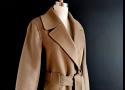

The Magic Cloth Technique
Advanced If you shoot landscapes - especially scenes containing water, such as waterfalls, oceans and lakes, you probably already know something about using a neutral density (ND) filter. The neutral density filter is the go-to tool for any photographer who wants to take a long exposure during daylight hours. All those stunning images of misty oceans and rivers that you've admired were probably taken with ND filters. But if you don't have a set of ND filters there is another trick you can employ to capture similar images - and it's less expensive and more flexible than a set of ND filters, too.
Before I explain this trick to you, it's important for you to understand how one type of ND filter in particular works. The graduated neutral density filter is a tool that was most likely invented by a photographer who was starting to get irritated by all the blown-out skies in his otherwise beautiful landscape photos. Because the sky in almost any daylight scene is brighter than the rest of the scene, a graduated neutral density filter - which is darker at the top and transparent at the bottom - will block some of the light coming from the sky while leaving the rest of the scene alone, resulting in a better exposure.
Like standard ND filters, graduated ND filters are available in different stops, and just so you'll have more stuff you need to buy, they also come in "hard" and "soft" versions, which basically means that the transition from dark to transparent is either abrupt or gradual. Now, since you're a photographer, you're used to having to buy expensive stuff. But a full set of high quality graduated neutral density filters might cost as much as (or more than) your DSLR, and for a lot of photographers (especially hobbyists) that's a hard pill to swallow.
This was landscape photographer Tony Brackley-Prower's beef with graduated neutral density filters when he pioneered a technique now widely known as "the magic cloth technique".
No, you don't need to infiltrate Madam Lestrange's vault to find this "magic" cloth, because you can really use just about anything to achieve the desired effect, from your smart phone to your sock - though if you're shooting a snowy scene you probably don't really want to use your sock. But the technique really is that simple, and if you don't have a dedicated "magic cloth" with you, just about anything will do in a pinch.
How to use the magic cloth
The magic cloth technique is exclusively used with long exposures of at least two seconds, though you will find it easier to execute with exposures that are a lot longer than that. The basic concept of the magic cloth technique is very simple. Just cover the front of your lens with your magic cloth or whatever object is standing in as your magic cloth, and then - using your camera's timer or a cable release - open the shutter and slowly raise the cloth. Fast movement will simulate a hard ND filter, while slow movement will simulate a soft one. Sounds like a no-brainer, right? Except that there's obviously a lot more to that, since the length of time you allow the cloth to block your lens will determine how much light is going to reach the sensor. The more time you hold it there, the more light you block. If you ever printed film images in a darkroom, this will seem familiar to you - it is very similar to the dodging and burning techniques film photographers once used to get the correct contrast in a print.
The Specifics
To get started with this technique, Tony Brackley-Prower suggests setting your exposure compensation at +2, which will help with your foreground exposure. Use as small an aperture as your lens will allow (f/16 or f/22, ideally) and make sure your ISO is also very low: no more than 100. You will most likely also need to purchase at least one standard (non-graduated) neutral density filter, preferably one that blocks at least 8 stops of light. Combining this technique with an ND filter will help you achieve those longer exposures that you need in order to have success with this technique.
So besides expense, why is this better than a graduated ND filter?
The coolest thing about the magic cloth technique is that it is dynamic, which means you aren't limited by where that transition in your graduated ND happens to be. You can apply the technique to the top or bottom of the frame, or even divide the frame into multiple parts and block each part for a different amount of time. You can create movement in the clouds by applying the magic cloth to the sky in short intervals rather than exposing it all at once. If an annoying tourist walks into your scene and starts poking around in a tide pool, you can cover your lens with the magic cloth and wait until he goes away. And if you're shooting at night and you want to capture both the foreground and the night sky without any star trails, you can use this technique to get the right exposure for both parts of your scene.
OK so what's the catch?
There's a reason why most photographers just bite the bullet and buy the set of filters - because the magic cloth technique, though very cool, requires a lot of patience and - worse - a lot of trial and error. Obviously any technique that relies on manual manipulation (vs. that little computer in your camera that can do everything in exactly the same way every single time) is going to be highly error-prone, which is why we photographers are always thanking our lucky stars that we no longer shoot expensive film. Since you'll need to shoot many frames and spend a lot of time in the field when experimenting with the magic cloth technique, you should probably only try it when you aren't out hiking with a bunch of people who'd really just like to get back to the campsite already. This technique can create magic, but it's going to take a lot of practice.
Like everything else, the magic cloth technique is one that you'll master over time, and with enough experimentation you'll get a pretty good feel for how the light will need to be manipulated in any one scene. Just don't forget that you're likely to have more failed images than good ones - and remember that if you keep working at it eventually the good ones will be those jaw-dropping, wow-inducing images that make other photographers green.


Pleins de conseils pour améliorer ses pizzas

J'ai fait ça pour mes rideaux mais dans la douleur. Il faut que je pratique ça pour que ça devienne plus naturel.

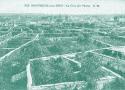
Une technique de culture qui permet de faire pousser des fruits en créant artificiellement un microclimat à l'aide d'un mur.
Des informations intéressantes pour réaliser un vêtement réversible.
Au menu :
- le choix d'un style
- le choix du tissu
- les détails de la construction
- les fermetures
Exemples :
Tutos
- Bias Tape Tutorial - Endings : 18 Steps (with Pictures) - Instructables
- Bias Tape Tutorial - Inner Corner : 7 Steps (with Pictures) - Instructables
- Bias Tape Tutorial - Outer Corner : 14 Steps (with Pictures) - Instructables
- Create a Print-at-Home Pattern PDF : 21 Steps (with Pictures) - Instructables
Guides

Comment faire des œufs pochés.
Comment coudre une fermeture éclair cachée. J'ai testé et le résultat est vraiment superbe !