1865 shaares
122 results
tagged
sans-gluten
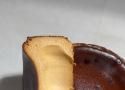
Ingredients
- 1,150 g full-fat cream cheese
- 260 g granulated sugar
- 350 g heavy cream
- 8 large eggs
- 45 g cornstarch
- 1 high-quality vanilla bean or 1 teaspoon vanilla bean paste
- 2 g salt
Instructions
- Preheat the oven to 220°C (430°F), conventional heat, and line a 24 cm cake ring or pan with parchment paper.
- Heat the heavy cream and vanilla in a saucepan until just below boiling.
- Place the sugar in a wide saucepan and caramelize gradually until it reaches a deep amber color.
- Carefully pour the hot cream into the caramel in several additions, stirring continuously. Cook until any hardened caramel has completely dissolved and the sauce is smooth.
- Add the salt and allow the caramel to cool until lukewarm.
- Mix the cream cheese on low speed until smooth. Add the lukewarm caramel and mix until fully combined.
- Gradually add the eggs, mixing on low speed to avoid incorporating air.
- Sift in the cornstarch and mix until the batter is smooth and uniform.
- Strain the batter into the prepared pan and bake for 25–30 minutes, until the top is deeply browned, the edges are set, and the center is still very jiggly.
- Allow the cake to cool completely at room temperature, then refrigerate for at least 8 hours, preferably overnight.
- Slice with a sharp knife for clean, neat portions.

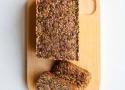
Ingredients
- 1 ½ cups dry steel cut oats
- ½ cup whole flax seeds
- ½ cup pumpkin seeds pepitas
- ½ cup sunflower seeds
- ½ cup quinoa flakes or oat flakes (see notes)
- 3 tablespoons whole psyllium husks
- 1 ½ cups water
- 4 teaspoons apple cider vinegar
- 1 ½ teaspoon salt (optional)
Instructions
- Soak the steel-cut oats: Place the steel-cut oats in a bowl and cover generously with water. Soak for 6 to 7 hours, until the oats are pliable and can be pressed between your fingers but still retain their shape. Do not oversoak. Drain very thoroughly using a fine mesh sieve.
- Combine the dry ingredients: Add the drained steel-cut oats, flaxseeds, sunflower seeds, pumpkin seeds, quinoa flakes, psyllium husk, and salt, is using, to a large bowl. Mix until evenly combined.
- Mix the liquids: In a separate container, stir together the water and apple cider vinegar.
Mix wet with dry: Pour over the oat and seed mixture. Mix thoroughly. Stir very well, making sure the psyllium and liquid are evenly distributed and there are no dry pockets. - Rest: Let the mixture sit for 25 to 30 minutes. This gives the psyllium time to fully hydrate and helps bind the loaf.
- Pack the loaf pan: Transfer the mixture to a nontoxic nonstick or parchment-lined 8 ½ x 4 ½-inch loaf pan. Press the mixture down very firmly and evenly. Compacting the mixture well is important for a loaf that holds together when sliced.
- Bake: Bake on the middle rack at 325°F (163°C) for 90 minutes.
Optional for a firmer crust: Carefully remove the bread from the pan for the final 10 to 15 minutes of baking and place it directly on the oven rack or a baking sheet. - Cool: Let the porridge bread cool completely, preferably on a cooling rack, before slicing. Allow at least 30 minutes so the loaf has time to firm up.

Ingrédients
- 6 cuisses de canard non gras
- 1 bocal de graisse de canard (400g)
- sel
- poivre du moulin
- 50 cl de bouillon de volaille
- un peu de vin blanc (15cl) + un parfum = l'alcool de votre choix, ici une cuiller à soupe de pineau des Charentes.
- aromates au goût (1 branche d'étoile de badiane, 1/2 cuiller à café de gingembre
en poudre, 1 feuille de laurier, 4 clous de girofle)
Instructions
- Débarassez les cuisses de leur peau, en incisant sous la peau et en tirant dessus.
- Faites-les cuire en cocotte, 3 heures de feu moyen à doux, avec le bouillon de volaille, le vin blanc, l'alcool de votre choix, les aromates pour parfumer.
- Au delà de ce temps lorsque le liquide s'est évaporé, ajoutez la graisse et laissez cuire encore 1.30 heure, les fibres doivent se séparer, aidez-les avec une spatule ou fourchette en bois.
- Laissez-les refroidir à température ambiante.
- Finissez d'écraser la préparation pour obtenir une pâte homogène et remplissez votre terrine en coulant un peu de graisse seule sur le dessus.
- Attendre 24 heures avant de déguster avec du pain au levain, aux céréales, et des cornichons !
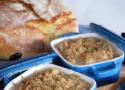
Ingrédients
- 2 lb (1 kg) de flanc de porc ( poitrine de porc ),désossé
- 1 lb (500 g) d'épaule de porc (échine de porc ), désossée
- 1 lb (500 g) de soc de porc (palette de porc ), désossé
- 300 g de gras de dos (gras de bardière)
- 1/2 lb (250 g) de panne de porc
- 400 ml d'eau
- 45 g de gros sel
- Poivre au goût
Instructions
- Couper, le flanc, l'épaule et le soc de porc en morceaux de la grosseur d'une noix.
- Réserver.
- Couper le gras de dos en petits dés et la panne de porc en petits lardons.
- Porter l'eau à ébullition dans un grand chaudron.
- À ébullition, ajouter la panne de porc et laisser fondre pendant 5 minutes.
- Ajouter le flanc, faire rissoler pendant 10 minutes à haute température, remuez à la spatule.
- Ajouter le soc et l'épaule et faire rissoler pendant 10 minutes en remuant.
- Ajouter le gras de dos, faites fondre jusqu'à ébullition.
- Après 1 heure, lorsque le jus et la graisse recouvrent l'ensemble, ajouter le sel et le poivre.
- Couvrir le chaudron, laissez émettre un petit bouillonnement.
- Laissez mijoter 6 heures environ, en remuant régulièrement, afin de bien effilocher la viande.

Ingrédients
- 40 g de graines de moutarde blanche
- 15 g de farine de millet
- 1 zeste de citron
- 4,5 cl d’eau
- 3 cl de vinaigre de cidre
- 3 cl d’huile de colza
- 1,5 cuiller à café de graines de cumin
- 1 cuiller à café de sucre de canne
- 3/4 cuiller à café de graines de poivre vert
- 1/2 cuiller à café de sel fin
Instructions
- Rincer les graines de moutarde, bien égoutter.
- Mettre à tremper dans le vinaigre pendant 2 h.
- Verser les graines avec leur vinaigre de trempage dans le bol d’un mini-hachoir ou d’un broyeur.
- Ajouter les autres ingrédients.
- Mixer jusqu’à obtention de la consistance souhaitée.
- Transférer dans un pot et conserver au réfrigérateur.

Ingrédients
- 300g de chocolat de bonne qualité
- 20 cl de crème à fouetter à 35%
- environ 50g de beurre de qualité
- cacao amer en poudre
Instructions
- Faire fondre le tout à petit feu, ou au mieux au bain-marie
- Laisser refroidir
- Faire des boulettes et les rouler dans le cacao

Ingrédients
- 190g de chocolat noir
- 150g de crème liquide
- 30g de beurre en pommade
- 25g de miel
- 5cl d'alcool (poire , mirabelle, chartreuse ...)
- nougatine
Instructions
- Tailler la nougatine en petits morceaux.
- Hacher le chocolat à l'aide d'un grand couteau.
- Le réserver dans un bol.
- Porter à ébullition la crème et le miel.
- Verser un tiers du liquide bouillant sur le chocolat, bien mélanger à la spatule ou au fouet, puis ajouter le reste en deux fois.
- Incorporer ensuite le beurre mou, lisser et l'alcool.
- Placer la préparation dans une poche à douille.
- Laisser refroidir.
- Faire ensuite des boules en versant directement un peu de ganache dans le pralin ou le chocolat en poudre.
- Ajouter quelques petits morceaux de nougatine.
- Former une boule bien ronde à la main.
- Réserver au frais dans une boite métallique.
Ingredients
Dough
- 8 ounces (2 cups) sliced blanched almonds
- 3 cups confectioners' sugar
- ½ teaspoon coarse salt
- 2 large egg whites
- Unsalted butter, softened, for molds
Royal Icing
- 1 pound confectioners' sugar
- 3 large egg whites or 5 tablespoons meringue powder mixed with ½ cup water
- Paste or gel food coloring (optional)
Instructions
- Dough: Place almonds in a food processor and process to form fine crumbs, about 2 minutes. Add sugar and salt and process until well combined and powder-like, about 1 minute. Add egg whites and process until a dough forms (it will have the texture of cookie dough). Wrap tightly in plastic wrap and refrigerate overnight.
- Preheat oven to 300°F with oven rack in the middle. Brush a set of 6 kransekake molds with butter. Divide dough in half. Working with one half of dough at a time, cut into small portions and roll into ropes that are slightly thicker than the diameter of a pencil (about 3/8-inch-to-1/2-inch thick). Fit ropes into rings of 3 molds, trimming to fit. Place molds on an unrimmed baking sheet and bake until puffed and lightly golden brown, about 30 minutes.
- Transfer molds to a wire rack and let cool completely on baking sheet. Repeat shaping and baking process with remaining half of dough and remaining 3 molds. Carefully remove rings from molds.
- Royal Icing: In the bowl of an electric mixer fitted with the paddle attachment, combine confectioners' sugar and egg whites. Mix on medium-high speed until combined and thickened, about 8 minutes. If decorating with more than one color, divide icing into batches. Using the end of a toothpick, add food coloring until the desired shade is achieved.
- To Assemble: Sort rings in order of size. Fill a piping bag with icing and pipe a few dots onto the base of the largest ring and adhere to a cake plate. Pipe icing onto the base of next largest ring, and stack on top of the first ring. Repeat process, continuing to stack rings in decreasing size to form a tower of 18 rings. Decorate as desired. Allow icing to set before serving.
Ingrédients
- 400 g de cream cheese (type fromage à tartiner, aussi trouvable en fromagerie en version artisanale)
- 400 g de mascarpone
- 300g de crème de marron
- 150 g de sucre semoule
- 5 œufs
- 30 cl de crème fleurette
- 25 g de fécule de maïs
Instructions
- Verser le cream cheese, le sucre, le mascarpone et la crème de marron dans la cuve d’un batteur et mélanger à vitesse moyenne. Quand le mélange est bien homogène, ajouter les oeufs un par un en laissant le batteur mélanger en même temps, toujours à vitesse moyenne.
- Incorporer la fécule et mélanger à nouveau. Ajouter ensuite la crème en filet et augmenter la vitesse pour homogénéiser l'appareil. Il est normal que l’appareil soit liquide.
- Beurrer un moule rond de 24 cm de diamètre. A l’aide d’un morceau de beurre, chemiser le moule avec du papier sulfurisé ; le papier doit dépasser tout autour du moule et adhérer aux parois. Y verser la préparation.
- Donner un coup sec avec le moule sur le plan de travail afin de chasser les bulles d’air. Enfourner et cuire 40 minutes à 220 degrés, chaleur tournante. La préparation doit brunir, mais le centre doit rester très crémeux.
- À la sortie du four, le cheesecake doit reposer. Une fois que le gâteau a refroidi, réserver 4 heures au frais ou, mieux, une nuit entière. Démouler avant de servir.
Ingrédients
- 500 g de marrons glacés (ou marrons au sirop)
- 5 marrons supplémentaires
- 25 cL de lait
- 15 cL de crème liquide type fleurette
- 1 cuillère à soupe de rhum (facultatif)
Instructions
- Utiliser des ingrédients bien froids.
- Mélanger le lait, la crème et le rhum. Couper grossièrement les 500 g de marrons et les ajouter au mélange.
- Mixer finement jusqu’à ce que ce soit parfaitement homogène.
- Mettre à turbiner.
- Pendant ce temps, couper les 5 marrons restant en cubes d’environ 1 cm de côté. Les ajouter à la glace en fin de turbinage.
Ingrédients
- 30 cL de lait entier
- 20 cL de crème
- 85 g de sucre
- 3 jaunes d’œufs
- 180 g de beurre de cacahuète (Dakatine ou équivalent)
Instructions
- Mettre le lait, la crème et le beurre de cacahuète dans une casserole.
- Faire chauffer lentement en remuant de temps en temps pour faire dissoudre le beurre de cacahuète.
- Couper le feu dès les premiers bouillons.
- Mettre le sucre et les jaunes d’œufs dans un saladier.
- Fouetter jusqu’à faire blanchir les jaunes d’œufs.
- Verser le contenu de la casserole sur les jaunes, tout en mélangeant pour homogénéiser.
- Remettre le tout dans la casserole et faire chauffer à feu moyen. Ne pas cesser de mélanger avec une cuillère en bois et stopper le feu dès que le mélange nappe la cuillère.
- Verser l’appareil dans le saladier et laisser refroidir quelques minutes.
- Réserver une nuit au réfrigérateur.
- Turbiner.
Ingrédients
- 35 cL de lait
- 15 cL de crème liquide (fleurette)
- 90 g de sucre
- 120 g de raisins secs
- 4 jaunes d’oeufs
- 1 gousse de vanille
- 2 cuillères (30 mL) à soupe de rhum (pour la glace)
- Du rhum en quantité suffisante (pour les raisins)
Instructions
- Dans une casserole, faire chauffer à la limite de l’ébullition le lait et la crème.
- Couper une gousse de vanille en deux et la raclée avec la pointe d’un couteau pour récupérer un maximum de grains de vanille. Mettre le tout (gousse et grains) dans la casserole. Laisser infuser une dizaine de minutes.
- Pendant ce temps, fouetter les jaunes d’oeuf avec le sucre dans un saladier jusqu’à blanchiment du mélange.
- Tout en filtrant, verser le lait sur les jaunes d’oeufs. Mélanger.
- Rincer la casserole et y remettre la préparation. Faire épaissir sur feu moyen tout en remuant. La préparation doit napper la cuillère. En fin de cuisson, ajouter les 2 cuillères à soupe de rhum et mélanger.
- Mettre les raisins dans un bol. Recouvrir de rhum.
- Laisser les deux préparations reposer une nuit au réfrigérateur.
- Mettre la préparation à turbiner.
- Pendant ce temps ,égoutter soigneusement les raisins réhydratés au rhum et les ajouter en fin de turbinage.
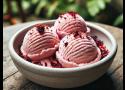
Ingrédients
- Fleurs d’hibiscus séchées : 50g
- Lait entier : 500ml
- Crème liquide : 250ml
- Sucre : 150g
- Jaunes d’œufs : 4
- Vanille : 1 gousse ou 1 cuillère à café d’extrait de vanille.
Instructions
- Infusion des fleurs d’hibiscus : Portez le lait à ébullition dans une casserole. Ajoutez les fleurs d’hibiscus séchées, couvrez et laissez infuser hors du feu pendant environ 20 minutes. Filtrez le mélange pour retirer les fleurs d’hibiscus et récupérez le lait infusé. Vous remarquerez que le lait aura pris une jolie teinte rose.
- Préparation de la crème anglaise : Dans un bol, fouettez les jaunes d’œufs avec le sucre jusqu’à ce que le mélange blanchisse. Remettez le lait infusé à chauffer doucement. Incorporez progressivement ce lait chaud au mélange d’œufs et de sucre, en remuant constamment pour éviter que les œufs ne cuisent. Versez ce mélange dans la casserole et faites cuire à feu doux en remuant constamment avec une spatule en bois jusqu’à ce que la crème nappe la spatule. Ne laissez pas bouillir.
- Incorporation de la crème et de la vanille : Une fois la crème anglaise épaissie, retirez-la du feu et ajoutez la crème liquide ainsi que les graines de la gousse de vanille ou l’extrait de vanille. Mélangez bien et laissez refroidir complètement. Pour accélérer le processus, vous pouvez placer le mélange au réfrigérateur.
- Turbiner la glace : Une fois le mélange bien froid, versez-le dans une sorbetière et laissez turbiner selon les instructions de l’appareil, généralement 20 à 30 minutes. La glace doit être onctueuse et bien prise. Si vous n’avez pas de sorbetière, vous pouvez verser le mélange dans un récipient adapté et le placer au congélateur en remuant toutes les 30 minutes pendant environ 3 heures pour éviter la formation de cristaux.
- Conservation et service : Transférez la glace dans un récipient hermétique et laissez-la prendre au congélateur pendant au moins 2 heures avant de servir. Servez la glace aux fleurs d’hibiscus séchées dans des coupes ou des cornets, décorée éventuellement de quelques fleurs séchées d’hibiscus pour une touche esthétique supplémentaire.

Ingredients
- 300ml Double cream
- 300ml Whole milk
- 6 Large free range egg yolk(s)
- 110g Silver Spoon Caster Sugar
- 1 Orange (zest of)
- 2 tbsp Orange juice (freshly squeezed)
- 2 tbsp Cointreau
Instructions
- Heat the cream, milk and orange zest in a large pan until just boiling.
- Take off the heat and leave to infuse for 10-15 minutes.
- Whisk the egg yolks and sugar until pale and thick. Whisk the cream mixture into the eggs, then pour back into the pan and return to the heat.
- Add the orange juice and Cointreau and cook until the custard has thickened, stirring continuously. Taking care not to boil.
- Leave to cool, then chill in the fridge for 4 hours or overnight.
- Churn in an ice cream maker OR place in the freezer, stirring every hour until frozen.
Ingrédients
- 30 cL de lait entier
- 20 cL de crème liquide
- 75 g de sucre
- 4 jaunes d’œufs
- 1 gousse de vanille
- Du kirch
- 130 g de fruits confits (choisissez le mélange de fruits confits qui vous donne le plus envie !)
Instructions
- Hacher grossièrement les fruits confits avec un gros couteau pour obtenir des petits dés.
Les mettre dans un bol et recouvrir de kirch. Filmer et réserver au réfrigérateur. - Mettre le lait et la crème dans une casserole.
- Couper la gousse de vanille en deux dans la sens de la longueur. Racler les graines avec la pointe d’un couteau et mettre le tout (gousse + graines) dans la casserole.
- Faire chauffer doucement et couper le feu dès le début de l’ébullition. Laisser infuser une quinzaine de minutes.
- Pendant ce temps, mettre les jaunes d’œufs et le sucre dans un saladier.
- Fouetter jusqu’à ce que le mélange devienne blanc et mousseux.
- Tout en filtrant pour retirer la gousse de vanille, verser le mélange lait / crème sur les jaunes fouettés.
- Homogénéiser avec le fouet.
- Remettre la préparation dans la casserole et faire chauffer lentement, tout en remuant, pour que la préparation épaississe légèrement. Elle doit napper la cuillère.
- Remettre le tout dans le saladier et laisser tiédir.
- Réserver une nuit au réfrigérateur.
- Mettre la préparation à turbiner.
- Pendant ce temps, égoutter les fruits confits.
- Les ajouter dans la sorbetière lorsque la glace commence à prendre.
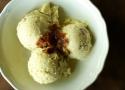
Ingredients
- 1 cup whole milk
- 2 cups heavy cream
- 1/2 cup sugar (100g)
- a pinch of salt
- 1 cup whole bean coffee (80g)
- 4 large egg yolks
- 4 Tbs maple syrup (the real stuff, not that Aunt Jemima shit)
- 4 strips of candied bacon, coarsely chopped
Instructions
- In a medium saucepan over medium heat, mix together the milk, 1 cup of cream, the sugar, salt and coffee. Stir until sugar is dissolved. Cover with a lid and remove from heat. Let steep for 1 hour.
- When the coffee mix has finished steeping, put it back on medium heat until warmed again. Strain the coffee beans and discard. Slowly add the heated coffee-cream into the egg yolks, whisking constantly. Return it all to the pan and cook, stirring constantly and scraping the bottom of the pan, until thick enough to coat the back of a spoon, about 12 minutes.
- Strain the custard and stir over an ice bath until cool. Refrigerate until well chilled, or up to three days. When chilled, whisk in the maple syrup.
- Churn the custard according to your ice cream maker’s instructions. At the end of churning, toss in the candied bacon bits.
- Store, covered in plastic wrap, in an airtight container, for up to 1 month.
Ingredients
- 125 g (4.4 oz) dark chocolate (from 50% to 70% cocoa). The higher the percentage of cocoa, the more intense the chocolate flavor.
- 185 g (6.5 oz) whole blanched almonds or almond flour
- 125 g (1 stick) unsalted butter
- 3 medium eggs, at room temperature
- 125 g (7 tablespoons) granulated sugar
- powdered sugar, for decoration
Instructions
- Melt the butter and chocolate in a double boiler and set aside.
- Meantime, separate the yolks from the whites and let the yolks aside for the moment.
- Place the whites in a bowl and beat them up with an electric mixer or with a stand mixer until stiff. Set aside: they will be added to the torta caprese mixture at the end.
- Beat the egg yolks with the sugar until you get a fluid and pale yellow cream. It takes about 5 minutes.
- Now if you are using whole blanched almonds, you must first mince them finely and reduce them to flour.
- Add the almond flour little by little to the yolks and sugar cream and mix well.
- Then add the melted chocolate to the mixture and stir.
- Add the beaten egg whites, stirring with a wooden spoon from the bottom up.
- Grease and flour a 20 cm/8 inch non-stick springform pan with removable bottom, then pour the torta caprese mixture.
- Level well with a spoon.
- Then preheat the oven to 350°F (180°C).
- Bake in a static oven on the middle rack for about 30 minutes.
- At the end, remove from the oven and let the cake cool in the pan for at least 30 to 40 minutes.
- Let it cool completely on a cooling rack so that it chills quickly without moistening the bottom of the cake.
NOTE -- Baking times may vary from oven to oven, but be aware that torta caprese should be moist inside. So usually, for a 20 cm/8 inch baking pan, the baking time never exceeds 35 to 38 minutes.
Ingredients
- 2 large eggs
- 1/2–1 tbsp orange zest
- 2 tbsp (30 g) fresh orange juice
- 1/3 cup (73 g) olive oil
- 1 tsp (5 g) vanilla extract
- 1/4 cup (85 g) honey
- 2 cups (192 g) almond flour
- 1/4 cup (30 g) almond meal
- 1/2 tsp (2 g) baking powder
- 1/2 tsp (2.5 g) baking soda
Instructions
- Preheat oven to 350°F (175°C). Grease 6”x3”3” loaf pan or a 8-inch round cake pan.
- In a large bowl, whisk the eggs until lightly frothy. Add the orange zest, orange juice, olive oil, vanilla, and honey. Whisk until smooth and fully combined.
- In a separate bowl, combine the almond flour, almond meal, baking powder, and baking soda.
- Gently fold the dry ingredients into the wet mixture until just incorporated. Do not overmix.
- Pour the batter into the prepared pan and smooth the top with a spatula.
- Bake for 30–35 minutes, or until a toothpick inserted into the center comes out clean.
- Allow the cake to cool completely in the pan before slicing.
Ingredients
Rhubarb layer
- softened unsalted butter, for greasing the cake pan
- 50 g (¼ cup) caster/superfine or granulated sugar
- 450 g (1 pound) rhubarb, about 8-10 stalks, trimmed (For the prettiest end result, use rhubarb stalks that are as red as possible.)
Vanilla cake
- 150 g (¾ cup) caster/superfine or granulated sugar
- 85 g (¾ stick) unsalted butter, softened
- 1 tsp vanilla bean paste (or 2 tsp vanilla extract)
- 3 US large/UK medium eggs, room temperature
- 180 g (1½ cups) plain gluten free flour blend (I used Doves Farm Freee gluten free plain white flour that doesn't have any xanthan gum added. You can also mix your own gluten free flour blend using this recipe. Note that for this homemade blend, 1 cup = 150g, so ideally use a digital food scale and the weight measurements for best results.)
- 50 g (½ cup) almond flour
- 1½ tsp baking powder
- ½ tsp xanthan gum (Omit if your gluten free flour blend already contains xanthan gum or other binders.)
- ¼ tsp salt
- 115 g (½ cup) full-fat plain or Greek-style yoghurt, room temperature
- 150 g (⅓ pound, about 1½ cups) rhubarb stalks, cut into roughly ½-inch (1cm) pieces
Instructions
Rhubarb layer
- First, trim the rhubarb stalks to make sure that they fit snugly into a 9-inch (23cm) cake pan. I recommend doing a test run, where you arrange them on the bottom of the pan before you line it with parchment/baking paper. That way, you’ll be confident that all the rhubarb stalks fit snugly on the bottom of the pan, without having to do any additional trimming later on.
When it comes to the rhubarb topping, you can make the “pattern” on top as simple or as complex as you want. I just cut the rhubarb stalks to size and arranged them in a simple parallel fashion (see blog post for photos). - Adjust the oven rack to the middle position and pre-heat the oven to 350ºF (180ºC). Lightly butter a 9-inch (23cm) round cake pan and line its bottom with a round of parchment/baking paper. Generously butter the parchment/baking paper as well.
Tip: Don't use a springform pan, as some of the rhubarb juices could leak out during baking. - Sprinkle the sugar in an even layer on the bottom of the prepared cake pan.
- Arrange the rhubarb stalks on top of the sugar so that they completely cover the bottom of the pan. Make sure that they're packed together as tightly as possible (that’ll prevent the batter from getting underneath them and it’ll give you the prettiest end result).
Set aside until needed.
Vanilla cake
- In a large bowl, cream together the sugar, butter and vanilla until pale and fluffy. You can do this by hand with a large balloon whisk, using a stand mixer fitted with the paddle attachment or a hand mixer fitted with the double beaters.
- Add the eggs, one at a time, mixing well after each addition, until well combined.
Tip: It's very important that your eggs are at room temperature and that you add them one at a time. This way, you'll maintain the emulsion of the butter as much as possible. If you forgot to take your eggs out of the fridge, place them in warm water for 5-10 minutes before using them. - In a separate bowl, whisk together the gluten free flour blend, almond flour, baking powder, xanthan gum and salt.
- Add half of the dry ingredients to the butter-sugar mixture, and whisk well to combine. Add the yoghurt and whisk until smooth. Finally, add the rest of the dry ingredients and whisk well until you get a smooth cake batter with no flour clumps.
Tip: This alternating way of adding dry and wet ingredients helps to maintain the emulsion of the butter in the cake batter as much as possible. When alternating dry and wet ingredients, make sure to always end with the dry. - Add the chopped rhubarb and mix well until it's evenly distributed throughout the batter.
- Dollop the batter on top of the rhubarb layer and smooth it out into an even layer.
- Bake at 350ºF (180ºC) for about 55-60 minutes or until the cake is golden brown on top, well risen and an inserted toothpick or cake tester comes out clean. If the cake starts browning too much or too quickly, cover it with a sheet of aluminium foil (shiny side up) and continue baking until done.
Inverting & serving the upside down cake
- Allow the cake to cool in the cake pan for 10-15 minutes, then carefully invert it onto a large plate while it's still hot. (Run a knife or a small offset spatula along the edges of the cake to loosen it from the pan if necessary.)
Tip: Don’t cool it for longer than that, otherwise your cake can end up sticking to the baking pan when you try to remove it. - Serve the cake either warm or cooled completely to room temperature. It pairs beautifully with a scoop of vanilla ice cream or a dollop of lightly sweetened vanilla whipped cream.
Ingredients
- 135 g salted butter, (US = just over ½ cup, or just over 1 stick)
- 55 g cocoa powder, (plus 1 tablespoon) unsweetened, plus extra for sprinkling
- 350 g sugar
- 110 g plain flour, (actually, just less than a full cup, about 0.85 cups)
- 1 teaspoon vanilla extract
- 3 eggs, lightly whisked
Instructions
- Pre-heat the oven to 180C/355F. Line the bottom of a 7-9 inch (see note below) springform cake pan with a circle of baking paper, then grease the paper and the sides of the pan.
- Melt the butter in a medium saucepan, then take off the heat and set aside.
- Add the cocoa, sugar, flour and vanilla to the butter and stir a little. Then add the eggs and stir everything together until well combined.
- Pour the mixture into the cake pan and bake for 20 to 25 minutes (see note below) until the top is set but the centre is still gooey (the top should be firm but crack under a little pressure from your finger).
- Let the cake cool in the pan, then run a knife between the pan and the cake to loosen it. Turn out onto a plate or cake stand (see note below). Dust generously with cocoa powder and serve warm with ice cream or cream.
Note 1 pour la version sans gluten, il suffit de remplacer la farine par de la poudre d'amandes.
Note 2 ne pas doubler la recette même si la quantité de beurre à l'air petite.
C'est très facile à faire et c'est excellent. À refaire !