1871 shaares
503 results
tagged
to-do
Ingredients
- 2 small white onions, sliced 1/4 inch thin rounds
- 7 oz (198.45 g) shredded parmesan cheese
- 1/2 tbs olive oil
- salt, garlic powder + paprika, to taste
Instructions
- Preheat oven to 400℉. Line an 12×17 inch rimmed baking sheet with parchment paper.
Sprinkle the baking sheet with the cheese so that there is a thin even layer of cheese. - Next, line up the onion ring slices so that they are not overlapping but right next to one another. Brush tops of onion rings with olive oil. Then season the tops with salt, garlic powder and paprika. Bake for 18 minutes or until golden brown. Allow to cool for 5-10 minutes and then break apart to serve.

Ingredients
Cake
- 1 cup plus 1 1/2 tablespoons (250 grams) unsalted butter (2 sticks plus 1 1/2 tablespoons), at room temperature and cut into cubes, plus extra for greasing the pan
- 7 ounce (200 grams) dark chocolate (70% cocoa solids), chopped into 3/4-inch/2-centimeter pieces
- 1 1/2 teaspoon instant coffee granules, dissolved in 1 1/2 cups/350 milliliters boiling water
- 1 1/4 cup (250 grams) granulated sugar
- 2 large eggs, lightly beaten
- 2 teaspoon vanilla extract
- 1 3/4 cup plus 2 tablespoons (240 grams) self-rising flour *(If you can't find self-rising flour, whisk together 240 grams AP flour and 2 3/4 teaspoons baking powder.)
- 1/3 cup (30 grams) Dutch-processed cocoa powder, plus 1 1/2 teaspoons, for dusting
- 1/4 teaspoon kosher salt
Chocolate Ganache (optional)
- 7 ounce (200 grams) dark chocolate (70% cocoa solids), broken or chopped roughly into 3/4-inch/2-centimeter pieces
- 3/4 cup (180 milliliters) heavy cream
- 1 tablespoon light corn syrup
- 1 tablespoon unsalted butter, at room temperature
Espresso Cinnamon Mascarpone Cream (optional)
- 1 1/2 cup plus 1 tablespoon (375 milliliters) heavy cream
- 3/4 cup (190 grams) mascarpone
- 1/2 vanilla pod, scraped
- 2 1/2 teaspoon finely ground espresso
- 3/4 teaspoon ground cinnamon
- 2 1/2 tablespoon confectioners’ sugar
Instructions
- Heat oven to 350°F (170°C). Grease a 9-inch round springform pan with butter and line with parchment paper, then set aside.
- Make the cake: Place butter, chocolate, and hot coffee in a large heatproof bowl and mix well until everything is melted, combined and smooth. Whisk in sugar by hand until dissolved. Add eggs and vanilla extract and whisk again until thoroughly combined and smooth. Sift flour, cocoa powder, and salt together into a bowl. Whisk this into the melted chocolate mixture. The batter here is liquid, but don’t think you have missed something; this is how it should be.
- Pour batter into the prepared pan and bake for 1 hour, or until the cake is cooked and a skewer inserted into the center comes out clean or with just a few dry crumbs attached. The top will form a crust and crack a little, but don’t worry, this is expected. Leave the cake to cool for 20 minutes before removing from the pan, then set aside until completely cool.
- Make the chocolate ganache, if desired: Place chocolate pieces in a food processor; process until fine and set aside. Combine cream and corn syrup in a small pan and place over medium-high heat. As soon as bubbles begin to appear (just before it comes to a boil), remove from the heat. Get the food processor running again, with the chocolate still inside, and pour in the hot cream in a steady stream. Process for 10 seconds, then add butter. Continue to process until mixture is shiny and smooth. (You can also make the ganache by hand; just make sure the chocolate is chopped fairly finely before adding the cream mixture. Stir with a wooden spoon until almost melted, then add the butter. Stir again until the ganache is smooth.)
- Use a rubber spatula to scrape the ganache into a bowl and cover with plastic wrap, with the plastic actually touching the top of the ganache. Set aside until it has set to the consistency you want. If you want a thin layer to spread over the cake, it can be poured over while liquid so that you get an even, light and shiny coating. For a thicker ganache with a spreading consistency, leave it for about 2 hours at room temperature. (The ganache can be stored at room temperature, providing it’s not too warm, for 3 days or kept in the fridge for up to 2 weeks. It can also be frozen, although it will lose a bit of its shine when defrosted.)
- Make the espresso cinnamon mascarpone cream, if desired: Place all the ingredients in the bowl of an electric mixer fitted with the whisk attachment. Beat for 1 to 2 minutes, or until soft peaks form.
- Peel the parchment from the cake and discard. Transfer to a serving platter and spread the ganache, if using, on top of the cake. Slice into wedges, divide the cake among plates and, if using, spoon the mascarpone cream alongside. With or without icing, the cake will keep well for 4 to 5 days in an airtight container.
Je pense que la technique du pojagi est toute adaptée à ça.
- 45" Cotton Nuance - Medora Flora - Fairway – SewBatik
- Découvrir le pojagi : une technique de patchwork coréenne
- Reversible Patchwork | Epida Studio
- Simple method to sew a modern pojagi patchwork seam | Epida Studio
Il y a un document gratuit à récupérer pour faire des panneaux qui donnent l'effet de vitrail. Il est recommandé d'utiliser du tissu batik pour obtenir cet effet.
Mon rideau doit couvrir une surface de L43"xH36". La barre de suspension fait ½" de diamètre.
Ingredients
- 150g rice bubbles or rice krispie cereal
- 180g granulated sugar
- 180g unsalted butter, cold from the fridge is fine
- 60g honey
- ½ tsp vanilla bean paste, optional
- Pinch of salt (leave out if using salted butter)
Instructions
- Grease and line an 8" (20cm) square pan with parchment paper, leaving the parchment extending over the sides of the pan to form a sling. Secure with binder clips if desired.
- Place the rice bubbles into a large bowl.
- In a heavy bottomed saucepan, combine the sugar, butter, and honey.
- Place over medium heat and heat, stirring often with a spatula, until the butter melts and the mixture comes to a boil.
- Reduce the heat slightly and continue to cook the mixture for 2 and a half minutes, stirring with a rubber spatula.
- Remove from the heat and add the vanilla and salt and mix to combine, then pour the caramel mixture over the rice bubbles.
- Stir well until the rice bubbles are evenly coated.
- Transfer the mixture to the prepared pan and smooth down with a spatula. If you would like to get it extra flat you can take a piece of parchment paper and use it to flatten down the top surface.
- Leave the rice bubble slice to set either at room temperature or in the fridge. When it is close to being cool (after about 30 to 45 minutes), slice into pieces using a sharp knife.
- Store either in the fridge or at room temperature in an airtight container. Rice bubble slice will keep for a few days but it is best eaten in the first 1-2 days.
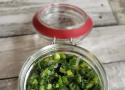
Ingredients
- Scallions ½ lb, well washed & trimmed
- Coarse Pickling Salt generous 3/4 cup
Instructions
- Finely slice the scallions crosswise with a sharp chef’s knife or other large knife. Transfer them to a large ceramic or glass bowl and add about one third of the salt, to cover them completely. Use your hands (my preference) or a wooden spoon to mix the scallions thoroughly with the salt, kneading them a little. The green parts of the scallion will look as if they are well speckled with white crystals. Then add another one third of the salt and mix again very thoroughly. Set aside overnight to let the salt do its work of pulling moisture out of the scallions.
- The next morning you’ll see some liquid at the bottom of the bowl, a salty brine, and the volume of scallions will have shrunk a little. Add the remaining salt and mix well, so that once more the scallion greens look dotted with white crystals.
- Transfer the mixture and its liquid to one or more clean glass jars, packing it in, seal with the lids, and label clearly. Store in a cool place, out of the sun. The flavours will fade after about 1 year.
Ingredienti
- 500g farina tipo 0 (forza W350 o almeno 13g di proteine)
- 500g acqua fredda (100% idratazione)
- 3g lievito di birra secco (o 5g fresco)
- 12g sale
- 20g olio extravergine d’oliva
Procedimento
- Sciogli il lievito e il sale nell’acqua, poi aggiungi la farina. Mescola fino a ottenere un impasto grezzo.
- Dopo 20 min, aggiungi l’olio e fai delle pieghe in ciotola fino a renderlo liscio.
- Copri e lascia riposare 30 min, ripeti le pieghe(3 pieghe tot ogni 30 min).
- Trasferisci in frigo per 12–24 ore.
- Riporta a temperatura ambiente, versa in teglia ben oliata e fai lievitare ancora 2 ore.
- Aggiungi i pomodorini, olio, sale grosso e origano. Inforna a 230°C per circa 20–25 min (fino a doratura).
- Lascia intiepidire e… goditi questa nuvola! 🤌
Ingrédients
- 500g de chocolat
- 450g de beurre
- 650g de sucre
- 650g d’œufs (environ 13 œufs)
- 200g de farine
Instructions
- On commence par faire fondre notre beurre.
- Pendant ce temps, on mélange le sucre, la farine, et on ajoute les œufs.
- Une fois que le beurre est bien fondu et chaud, on le verse dans le chocolat.
- On mélange jusqu’à ce que le chocolat soit complètement fondu.
- On verse le chocolat et le beurre dans le mélange.
- On poche la pâte directement dans des moules individuels.
- L’astuce, c’est que ça tu vas pouvoir le conserver dans ton frigo facilement 15 jours et les cuire quand tu veux pour le goûter des enfants.
- Cuisson : 10 minutes, 170 degrés Celsius.
Moins vous cuisez, plus ça sera moelleux au milieu. Voir coulant.
Si tu veux un cœur ultra coulant : 8 minutes.
Si tu veux moelleux partout : 12 minutes.
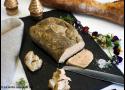
Ingrédients
- Un foie gras de qualité éveiné ou non
- gros sel 1 ou 2 kg
- poivre
- 4 épices
- sucre
- sel fin
- porto ou autre alcool type armagnac, pineau
- gaze ou compresses
Instructions
- Éveiner le foie si ce n’est déja fait et le reconstituer.
- Saupoudrer le foie d'une pincée de 4 épices et d'un peu de sucre en poudre, salez le normalement
- L’entourer de 2 couches de gaze ( faire attention à ce qu’il soit bien enfermé dans la gaze )
- Déposer un lit de gros sel dans un récipient, poser le foie gras dessus et recouvrir totalement de gros sel. Réserver au frais 15h pour un foie de 500 gr mi-cuit.
- Ôter le foie du sel et ôter la gaze
- Saupoudrer le foie de beaucoup de poivre moulu.
- Imprégner un peu de gaze de 2 à 3 cuillères à soupe d’alcool et emballer à nouveau le foie avec.
- Rouler le tout dans un torchon propre et bien serré et laisser reposer 24 à 48 h avant dégustation.
Notes : Il faut compter deux heures de " cuisson" au sel pour 100g de foie. 12h pour un foie de 600g, 14h pour un foie de 700g, etc...
Ingredients
- 1 pound of diced leg of mutton or lamb
- 1/2 cup of rendered sheep fat
- 1/2 teaspoon of salt
- 1 cup of beer
- 1/2 cup of water
- 1 small onion, chopped
- 1 cup of chopped arugula
- 1 cup of Persian shallots or spring onions
- 1/2 cup of chopped fresh cilantro
- 1 teaspoon of cumin
- 1 pound of fresh red beets, peeled and diced
- 1/2 cup of chopped leek
- 2 cloves of garlic
For the garnish
- 2 teaspoons of dry coriander seed
- 1/2 cup of finely chopped cilantro
- 1/2 cup of finely chopped kurrat or ramps/wild leek
Instructions
- Heat the fat in a pot wide enough for the diced lamb to spread in one layer.
- Add lamb and sear on high heat until all moisture evaporates.
- Fold in the onion, and keep cooking until it is almost transparent.
- Fold in red beet, arugula, cilantro, Persian shallots and cumin. Keep on folding until the moisture evaporates and ingredients emit a pleasant aroma.
- Pour in the beer. Add water. Give the pot a light stir. Bring the pot to a boil.
- Reduce heat and add leek and garlic that you crush in a mortar.
- Let the stew simmer until the sauce thickens after about an hour.
- Chop kurrat and fresh cilantro and pound it into a paste using a mortar.
- Ladle the stew into plates and sprinkle with dry coriander seed and the kurrat and cilantro paste. The dish can be served with steamed bulgur and naan-bread.
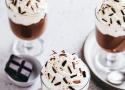
Ingrédients
Crème au chocolat
- 480 g lait demi écrémé
- 120 g crème liquide entière 30%mg
- 15 g sucre cassonade
- 30 g maïzena
- 90 g chocolat noir pâtissier à 65-70% cacao
- 70 g chocolat au lait pâtissier
Chantilly mascarpone
- 200 g crème liquide entière 30%mg très froide
- 100 g mascarpone très froid
- 25 g sucre glace
- 0,5 cc extrait naturel de vanille
Préparation
Crème au chocolat
- Dans un bol, verser la maïzena. Délayer en ajoutant 150g de lait petit à petit en fouettant bien pour ne plus avoir de grumeaux.
- Dans une casserole, verser le reste de lait (330g), la crème liquide et le sucre cassonade. Commencer à chauffer à feu doux.
- Ajouter rapidement la maïzena délayée. Continuer de fouetter tout en chauffant le mélange.
- Avant ébullition (ne pas chauffer trop fort), ajouter le chocolat noir et le chocolat au lait en morceaux pour qu'il fonde. Ne pas cesser de fouetter jusqu'à ce que le crème se forme, environ 4-5 minutes à feu doux.
- Verser le mélange dans un verre doseur puis dans 4 verres à dessert en les remplissant aux 3/4 pas plus (vous pourrez peut-être faire plus de verres selon leur taille).
- Laisser tiédir puis placer au réfrigérateur 2 heures.
Chantilly mascarpone
- Dans un large récipient ou bol du robot, verser la crème liquide très froide, le mascarpone, le sucre glace et la vanille. Commencer à fouetter vitesse moyenne jusqu'à ce que la chantilly se forme. Une fois que la chantilly se forme, bien lisse, elle est prête. Ne pas insister au risque qu'elle graine.
- Verser la chantilly dans une poche à douille munie d'un gros embout cannelé (voir matériel ci-dessus). Placer la poche à douille au dessus de la crème au chocolat froide. Dessiner un cercle de l'extérieur vers l'intérieur du verre, en faisant plusieurs tours pour créer un joli dôme de chantilly.
- Râper quelques copeaux de chocolat gratter la tranche d'une tablette de chocolat à l'aide d'un économe. Déposer les copeaux sur la chantilly.
- Garder les verres au réfrigérateur jusqu'à dégustation.
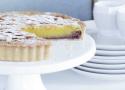
Ingrédients
Pâte sucrée
- 150 g de beurre mou
- 100 g de sucre glace
- 50 g de poudre d'amande
- 1 œuf battu
- 250 g de farine
Garniture
- 125 g de sucre glace
- 100 g de beurre mou
- 3 oeufs
- 1 c. à c. d'extrait naturel d'amande amère
- 150 g de poudre d'amande
- 6 c. à s. de confiture de framboise
- 40 g d'amandes efillées
Instructions
- Mettez le beurre mou, le sucre et la poudre d’amande dans la cuve du robot équipé de la feuille. Faites fonctionner l’appareil pour travailler ce mélange jusqu’à ce qu’il soit homogène. Ajoutez l’œuf, puis la farine et battez jusqu’à ce que la pâte forme une boule. Enveloppez-la dans du film alimentaire et réservez-la 1 h au réfrigérateur.
- Préchauffez le four à 160 °C (th. 5) en chaleur ventilée.
- Sur un plan de travail fariné, abaissez la pâte sur 4 mm d’épaisseur au rouleau à pâtisserie et garnissez-en un moule à tarte beurré de 25 cm de diamètre (de préférence à fond amovible). Cette pâte est très fragile et se casse facilement : il faut l’enrouler autour de votre rouleau à pâtisserie et la dérouler délicatement au-dessus du moule. Piquez le fond de tarte avec une fourchette et faites-le cuire pendant 12 à 15 min. Il doit à peine dorer. Laissez refroidir sur une grille.
- Abaissez la température du four à 150 °C (th. 5) en chaleur ventilée.
- Nettoyez la cuve et la feuille. Mettez le sucre et le beurre dans la cuve et rééquipez le robot de la feuille. Travaillez à petite vitesse la préparation jusqu’à ce qu’elle s’aère et éclaircisse. Ajoutez les œufs l’un après l’autre en battant bien entre chaque ajout. Incorporez l’amande amère et la poudre d’amande.
- Étalez la confiture de framboise sur le fond de tarte et recouvrez de crème aux amandes. Lissez et décorez avec les amandes effilées. Enfournez pour 20 à 25 min. La garniture doit avoir une jolie couleur doré clair. Laissez refroidir 15 min avant de démouler sur une grille. Saupoudrez de sucre glace avant de servir.
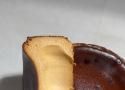
Ingredients
- 1,150 g full-fat cream cheese
- 260 g granulated sugar
- 350 g heavy cream
- 8 large eggs
- 45 g cornstarch
- 1 high-quality vanilla bean or 1 teaspoon vanilla bean paste
- 2 g salt
Instructions
- Preheat the oven to 220°C (430°F), conventional heat, and line a 24 cm cake ring or pan with parchment paper.
- Heat the heavy cream and vanilla in a saucepan until just below boiling.
- Place the sugar in a wide saucepan and caramelize gradually until it reaches a deep amber color.
- Carefully pour the hot cream into the caramel in several additions, stirring continuously. Cook until any hardened caramel has completely dissolved and the sauce is smooth.
- Add the salt and allow the caramel to cool until lukewarm.
- Mix the cream cheese on low speed until smooth. Add the lukewarm caramel and mix until fully combined.
- Gradually add the eggs, mixing on low speed to avoid incorporating air.
- Sift in the cornstarch and mix until the batter is smooth and uniform.
- Strain the batter into the prepared pan and bake for 25–30 minutes, until the top is deeply browned, the edges are set, and the center is still very jiggly.
- Allow the cake to cool completely at room temperature, then refrigerate for at least 8 hours, preferably overnight.
- Slice with a sharp knife for clean, neat portions.
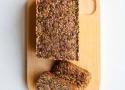
Ingredients
- 1 ½ cups dry steel cut oats
- ½ cup whole flax seeds
- ½ cup pumpkin seeds pepitas
- ½ cup sunflower seeds
- ½ cup quinoa flakes or oat flakes (see notes)
- 3 tablespoons whole psyllium husks
- 1 ½ cups water
- 4 teaspoons apple cider vinegar
- 1 ½ teaspoon salt (optional)
Instructions
- Soak the steel-cut oats: Place the steel-cut oats in a bowl and cover generously with water. Soak for 6 to 7 hours, until the oats are pliable and can be pressed between your fingers but still retain their shape. Do not oversoak. Drain very thoroughly using a fine mesh sieve.
- Combine the dry ingredients: Add the drained steel-cut oats, flaxseeds, sunflower seeds, pumpkin seeds, quinoa flakes, psyllium husk, and salt, is using, to a large bowl. Mix until evenly combined.
- Mix the liquids: In a separate container, stir together the water and apple cider vinegar.
Mix wet with dry: Pour over the oat and seed mixture. Mix thoroughly. Stir very well, making sure the psyllium and liquid are evenly distributed and there are no dry pockets. - Rest: Let the mixture sit for 25 to 30 minutes. This gives the psyllium time to fully hydrate and helps bind the loaf.
- Pack the loaf pan: Transfer the mixture to a nontoxic nonstick or parchment-lined 8 ½ x 4 ½-inch loaf pan. Press the mixture down very firmly and evenly. Compacting the mixture well is important for a loaf that holds together when sliced.
- Bake: Bake on the middle rack at 325°F (163°C) for 90 minutes.
Optional for a firmer crust: Carefully remove the bread from the pan for the final 10 to 15 minutes of baking and place it directly on the oven rack or a baking sheet. - Cool: Let the porridge bread cool completely, preferably on a cooling rack, before slicing. Allow at least 30 minutes so the loaf has time to firm up.

Ingrédients
- 450 g de raisin secs
- 450 g de canneberges séchées
- 225 g d’abricot secs hachés
- 225 g d’ananas secs hachés
- 100 g de zeste d’orange confit
- 1 ou 2 tasses de rhum ou de brandy
- 225 g de cerises glacées
- 225 g de noix de Grenoble hachées
- 225 g d’amandes hachées
- 1 ¼ tasse de mélasse
- 2 culières à café de macis
- 2 culières à café de cannelle
- 2 culières à café de clous de girofle
- 2 culières à soupe de cacao
- 3 ½ tasses de farine
- 1 culières à café de poudre à pâte
- 450 g de beurre
- 450 g de cassonade foncée
- 8 gros œufs
Instructions
- Dans un grand bol, mélanger les raisins secs, les canneberges, les abricots, les ananas, les zestes d’oranges et de citrons et les cerises.
- Couvrir de l’alcool choisi, mettre un couvercle sur le bol et laisser macérer toute la nuit.
- Ajouter les noix et les amandes le lendemain.
- Dans une casserole, mettre la mélasse, les épices et le cacao à chauffer.
- Laisser mijoter 10 minutes puis retirer du feu.
- Battre le beurre jusqu’à ce qu’il devienne léger.
- Incorporer le sucre.
- Continuer de battre jusqu’à ce que le mélanger soit mousseux et que les ingrédients soit bien mélangés.
- Ajouter les fruits et la mélasse et bien remuer.
- Tamiser la farine et la poudre à pâte et battre les œufs légèrement.
- Bien mélanger à la cuillère de bois.
- Verser dans trois ronds et profonds de 24 cm de diamètre, garnis de papier ciré beurré des deux cotés, ou trois moules à poudings de 2 litres bien graissés.
- Placer au centre du four, chauffer à 110 degrés Celsius, pendant 4 ou 5 heures.
- Laisser les refroidir avant de démouler.
- Quand le gâteau est tout à fait froid, le badigeonner d’un peu de rhum ou de brandy.
- Envelopper dans un linge imbibé de rhum ou de brandy et mettre dans un endroit frais.

Ingrédients
- 6 cuisses de canard non gras
- 1 bocal de graisse de canard (400g)
- sel
- poivre du moulin
- 50 cl de bouillon de volaille
- un peu de vin blanc (15cl) + un parfum = l'alcool de votre choix, ici une cuiller à soupe de pineau des Charentes.
- aromates au goût (1 branche d'étoile de badiane, 1/2 cuiller à café de gingembre
en poudre, 1 feuille de laurier, 4 clous de girofle)
Instructions
- Débarassez les cuisses de leur peau, en incisant sous la peau et en tirant dessus.
- Faites-les cuire en cocotte, 3 heures de feu moyen à doux, avec le bouillon de volaille, le vin blanc, l'alcool de votre choix, les aromates pour parfumer.
- Au delà de ce temps lorsque le liquide s'est évaporé, ajoutez la graisse et laissez cuire encore 1.30 heure, les fibres doivent se séparer, aidez-les avec une spatule ou fourchette en bois.
- Laissez-les refroidir à température ambiante.
- Finissez d'écraser la préparation pour obtenir une pâte homogène et remplissez votre terrine en coulant un peu de graisse seule sur le dessus.
- Attendre 24 heures avant de déguster avec du pain au levain, aux céréales, et des cornichons !
Ingrédients
- 2 lb (1 kg) de flanc de porc ( poitrine de porc ),désossé
- 1 lb (500 g) d'épaule de porc (échine de porc ), désossée
- 1 lb (500 g) de soc de porc (palette de porc ), désossé
- 300 g de gras de dos (gras de bardière)
- 1/2 lb (250 g) de panne de porc
- 400 ml d'eau
- 45 g de gros sel
- Poivre au goût
Instructions
- Couper, le flanc, l'épaule et le soc de porc en morceaux de la grosseur d'une noix.
- Réserver.
- Couper le gras de dos en petits dés et la panne de porc en petits lardons.
- Porter l'eau à ébullition dans un grand chaudron.
- À ébullition, ajouter la panne de porc et laisser fondre pendant 5 minutes.
- Ajouter le flanc, faire rissoler pendant 10 minutes à haute température, remuez à la spatule.
- Ajouter le soc et l'épaule et faire rissoler pendant 10 minutes en remuant.
- Ajouter le gras de dos, faites fondre jusqu'à ébullition.
- Après 1 heure, lorsque le jus et la graisse recouvrent l'ensemble, ajouter le sel et le poivre.
- Couvrir le chaudron, laissez émettre un petit bouillonnement.
- Laissez mijoter 6 heures environ, en remuant régulièrement, afin de bien effilocher la viande.

Ingrédients
- 40 g de graines de moutarde blanche
- 15 g de farine de millet
- 1 zeste de citron
- 4,5 cl d’eau
- 3 cl de vinaigre de cidre
- 3 cl d’huile de colza
- 1,5 cuiller à café de graines de cumin
- 1 cuiller à café de sucre de canne
- 3/4 cuiller à café de graines de poivre vert
- 1/2 cuiller à café de sel fin
Instructions
- Rincer les graines de moutarde, bien égoutter.
- Mettre à tremper dans le vinaigre pendant 2 h.
- Verser les graines avec leur vinaigre de trempage dans le bol d’un mini-hachoir ou d’un broyeur.
- Ajouter les autres ingrédients.
- Mixer jusqu’à obtention de la consistance souhaitée.
- Transférer dans un pot et conserver au réfrigérateur.

Ingrédients
- 150 gr de farine blanche
- 150 gr de sucre blanc
- 40 gr d'amandes amères moulues (sinon amandes normales mondées et moulues)
- 2 c c de levure chimique
- le zeste rapé et le jus d'un demi-citron
- 150 à 200 gr de baies de sureau noir égrenées
- 3 oeufs battus à la fourchette
- 150 gr de beurre fondu
- 1 yaourt nature (125 gr)
- 2 c s d'eau de fleur d'oranger
Instructions
- Dans un grand bol, mélanger la farine, le sucre, les amandes moulues, la levure chimique, le zeste de citron et les baies de sureau, sans les écraser.
- Dans un 2e bol, mélanger les oeufs, le beurre, le yaourt, le jus de citron, l'eau de fleur d'oranger.
- Mélanger ensuite le contenu des 2 bols, et laisser reposer une heure au frais.
- Répartir dans des moules en silicone, et faire cuire 12 à 15 minutes au four préchauffé à 220°.
- Laisser tiédir avant de démouler.

Ingrédients
Pour le sablé
- 1 tasse (120 g) de farine
- 7 cuillères à table (100 g) de beurre salé, ramolli
- 1/2 gousse de vanille
- 7 cuillères à table de sucre démérara
- 2 cuillères à table d’amandes en poudre
- 2 jaunes d’œuf
- 1/2 cuillère à thé de poudre à pâte ( levure chimique )
Pour la compotée de pommes
- 8 pommes évidées et coupées en 6
- 6 cuillères à table de sucre démérara
- 2 moitiés de coings pochés, coupées en lamelles ( recette ici ( clic ) )
- 1/4 tasse ( 60 ml ) de sirop chaud de cuisson des coings
Instructions
Pour le sablé
- Mélanger la farine, la poudre à pâte, les graines de vanille, la poudre d’amande et le sucre.
- «Sabler» les ingrédients secs avec le beurre, c’est-à-dire en roulant la pâte entre les mains (il faut travailler rapidement, pour ne pas faire fondre le beurre), jusqu’à l’obtention d’une pâte à la texture sableuse, mais homogène.
- Ajouter les jaunes d’œufs, pétrir une dernière fois, couvrir la pâte d’un linge propre et laisser reposer 15 minutes au frais.
- Étaler la pâte dans un moule à fond amovible, en la travaillant avec les doigts.
- Cuire au four à 300 F ( 150 C ), de 20 à 25 minutes ou jusqu’à ce que la pâte commence à blondir.
- Laisser refroidir avant de démouler.
Pour la compotée de pommes
- Mettre les pommes à cuire dans une casserole avec un fond d’eau (pour ne pas que ça colle en début de cuisson) et le sucre pendant environ 15 minutes ou jusqu’à ce que les pommes soient compotées.
- Réserver sans les écraser.
Montage
- Étendre les pommes compotées sur la pâte refroidie.
- Ajouter les lamelles de coings sur les pommes, puis badigeonner au pinceau de sirop de cuisson des coings.