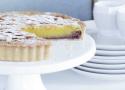
Ingrédients
Pâte sucrée
- 150 g de beurre mou
- 100 g de sucre glace
- 50 g de poudre d'amande
- 1 œuf battu
- 250 g de farine
Garniture
- 125 g de sucre glace
- 100 g de beurre mou
- 3 oeufs
- 1 c. à c. d'extrait naturel d'amande amère
- 150 g de poudre d'amande
- 6 c. à s. de confiture de framboise
- 40 g d'amandes efillées
Instructions
- Mettez le beurre mou, le sucre et la poudre d’amande dans la cuve du robot équipé de la feuille. Faites fonctionner l’appareil pour travailler ce mélange jusqu’à ce qu’il soit homogène. Ajoutez l’œuf, puis la farine et battez jusqu’à ce que la pâte forme une boule. Enveloppez-la dans du film alimentaire et réservez-la 1 h au réfrigérateur.
- Préchauffez le four à 160 °C (th. 5) en chaleur ventilée.
- Sur un plan de travail fariné, abaissez la pâte sur 4 mm d’épaisseur au rouleau à pâtisserie et garnissez-en un moule à tarte beurré de 25 cm de diamètre (de préférence à fond amovible). Cette pâte est très fragile et se casse facilement : il faut l’enrouler autour de votre rouleau à pâtisserie et la dérouler délicatement au-dessus du moule. Piquez le fond de tarte avec une fourchette et faites-le cuire pendant 12 à 15 min. Il doit à peine dorer. Laissez refroidir sur une grille.
- Abaissez la température du four à 150 °C (th. 5) en chaleur ventilée.
- Nettoyez la cuve et la feuille. Mettez le sucre et le beurre dans la cuve et rééquipez le robot de la feuille. Travaillez à petite vitesse la préparation jusqu’à ce qu’elle s’aère et éclaircisse. Ajoutez les œufs l’un après l’autre en battant bien entre chaque ajout. Incorporez l’amande amère et la poudre d’amande.
- Étalez la confiture de framboise sur le fond de tarte et recouvrez de crème aux amandes. Lissez et décorez avec les amandes effilées. Enfournez pour 20 à 25 min. La garniture doit avoir une jolie couleur doré clair. Laissez refroidir 15 min avant de démouler sur une grille. Saupoudrez de sucre glace avant de servir.

For an apple pie filling of tender but intact chunks of fruit, balanced perfectly between tart and sweet, not all apples are created equal.
I'm not much of a sweets person. Would I rather eat apple pie, or pizza pie? I often ask myself. You can guess what I reward myself with for answering that question correctly.*
*Okay, I'll tell you: It's pizza.
But fall is the one time of year that I genuinely look forward to baking pies, if only because I truly love apple-picking and need some way to get rid of all the excess apples I inevitably bring home. Being allergic to the raw fruit, and having a wife who thinks that nontropical fruits are not worth her time, I usually end up putting them in baked desserts.
Thing is, if you think that making an apple pie is as simple as picking any old apple up from the orchard or the supermarket, chopping it up, then tossing it with some sugar, cinnamon, perhaps a bit of cornstarch or flour to thicken up its juices, and baking it—well, then I can only assume that you've probably ended up baking a few bad pies in your lifetime. I know that I have.
What Makes the Best Apple Pie?
Like burgers and pizza, I believe pie to be one of the truly perfect foods. A culinary endpoint that can be improved incrementally, but not fundamentally. The true beauty of a pie comes from that magical interaction between crust and filling. One sweet, tart, and fruity, the other buttery and rich, they complement each other in flavor and texture and create a dish that is so much greater than the sum of its parts. As such, each part deserves respect.
What I want in my apple pie filling is, first and foremost, apples that are completely tender, yet stay in distinct chunks, with just a bit of al dente bite to them. Apples that turn to mush or, worse, are mealy can ruin a good pie for me.
I want those apples to be bound together with just a bare hint of a shiny glaze—not a torrent of juice that soaks the bottom crust or a sauce so thick that it becomes gloppy. (If you want that, you can get it at McDonald's, two for $1.) Apple pie should be sweet but never cloying, with a bare hint of cinnamon—this is an apple pie, after all, not a cinnamon pie. Finally, it should taste overwhelmingly of fresh apples, with a bright, clean flavor.
Picking the Right Type of Apple
Some apples just don't make good pies. They're too sweet, too mealy, or too tart. They disintegrate when you cook them, they release too much liquid, they just taste funny. The task in front of me was to find out which apples were up to the task of meeting the criteria I've laid out above—apples that would stay in distinct slices as they softened in the oven, and that struck the right balance of sweet and tart.
I rolled up my sleeves, made a few dozen batches of pie crust, then headed into the kitchen for some serious baking.
I started with two batches of 10 pies each, using 10 of the most common apple cultivars widely available in the United States. My apologies if your favorite apple type was left off this list—with over 7,500 known cultivars of apples, it's absolutely impossible to test every single one of them.
I figured with these 10 varieties, I should be able to find at least one that is available to everyone in the United States. (You overseas readers will have to do this research on your own.)
Here's what I tried:
- Braeburn
- Cortland
- Empire
- Fuji
- Golden Delicious
- Granny Smith
- McIntosh
- Red Delicious
- Rome
- Gala
To test them, I weighed out identical batches of each apple, cut them into quarter-inch-thick slices, and tossed them with sugar, just a touch of cinnamon, and a bit of cornstarch to thicken their juices. I purposefully left the cinnamon level very low and left out any other flavorings, like vanilla or lemon juice, in order to make sure that the apple flavor came to the forefront of each pie.
After baking them all off, I allowed them to cool and rest at room temperature for eight hours, to ensure that all of them had cooled down completely before I tasted them.
Color-Coding: How Browning in Apples Provides a Key to Texture
The array of textures and flavors that emerged was truly remarkable—even more varied than the differences between raw apples. Some, like Granny Smith and Empire, were great at keeping their shape, resulting in the tender-but-firm chunks I look for in good apple pie. But Granny Smiths are too tart, and Empires are too sweet. Other apples showed the opposite problem—decent flavor, but lacking in texture.
Unfortunately, I didn't find a single apple that was completely successful both in flavor and in texture.
But I did notice an interesting phenomenon when I accidentally left out a few bags of sliced apples for a bit too long.
I noticed as the apples were sitting that, depending on the variety, they browned to a different degree. Some, like Red Delicious, turned dark brown almost immediately. On the other hand, even after several hours, Granny Smiths showed only a hint of browning.
I arranged the apples on a plate in order of their level of browning.** What immediately struck me was that the least tart apple—the Red Delicious—was all the way at one end, while the most tart apple—the Granny Smith—was all the way at the other end.
** The order they are arranged in in the photograph is by level of browning relative to their original color, which is why some appear to be out of order.
This makes sense: Acid can inhibit the browning oxidation reactions that take place in fruit flesh when it is exposed to the air. For the same reason, cooks will store trimmed artichokes in acidulated water—it prevents browning.
But what did that mean for my fillings?
Well, there's another thing that acid does: It strengthens pectin, the cement-like glue that holds together the cells of fruit. So, looking at this arranged spectrum of apples is actually a pretty good indication of how well each fruit is going to hold up during baking. The farther to the right along the browning scale, the firmer the apple should be in the finished pie.
After arranging the baked pies in this same order and examining their fillings, turns out that this is indeed true. As you'll see in the photos below, the pies start off with very mushy fillings that get progressively firmer.
The Results
Here are all of my tasting notes. Afterward, I'll discuss how flavor is a factor.
Red Delicious
Flavor: Very sweet and one-dimensional.
Texture: Mealy flesh that turns to mush when cooked. Skin is thick and can be quite bitter. It may look good on the supermarket shelf for a long time, but is really only tasty when fresh-picked.
Pie Rating (1–10): 1. Completely mushy, with a very one-dimensional, cloying flavor. This reminded me of bad applesauce.
Best Uses: Eating out of hand, but only when very fresh.
McIntosh
Flavor: Sweet and mildly tart, with very white flesh.
Texture: Tender and slightly grainy.
Pie Rating (1–10): 3. It holds up better than, say, Red Delicious in pies, but still turns quite brown and mushy.
Best Uses: Applesauce or eating out of hand.
Braeburn
Flavor: Very sweet and mildly tart, with a unique citrusy aroma, similar to Granny Smith (of which it is a descendant). It becomes almost pear-like in flavor when it cooks.
Texture: Quite crisp and not much graininess. This texture seems to indicate that it indeed has a fairly strong structure of pectin.
Pie Rating (1–10): 7. It manages to soften fully while still retaining a good deal of texture when baked into an apple pie, due to its density. It could be slightly firmer when baked. Great golden color.
Best Uses: Pies, tarts, sauce, eating plain.
Rome
Flavor: Very mild when eaten out of hand; not very sweet, but develops in flavor when cooked.
Texture: It has a thick skin and very firm flesh. Though it has a reputation as a good baking apple, I found it unsuitable.
Pie Rating (1–10): 3. It turns dark brown and mushy as it bakes.
Best Uses: Sauce.
Fuji
Flavor: Quite sweet and fresh-tasting; not cloying.
Texture: Crisp flesh that stays good for a long time. The texture is almost pear-like in its moisture level and crunchiness.
Pie Rating (1–10): 2. The mild flavor does not get enhanced by baking. Watery but tart.
Best Uses: Eating out of hand.
Golden Delicious
Flavor: Sweet, tart, and almost buttery. Well balanced and rich, especially when cooked.
Texture: Very fresh and quite crisp, but can border on mealy when held for too long off the tree. When baked, it softens but retains a bit of texture.
Pie Rating (1–10): 8. The best flavor I got out of any single apple—this is what apple pie should taste like. I just wish it were slightly firmer.
Best Uses: Pies, sauce, apple butter.
Cortland
Flavor: Similar to that of a McIntosh, but much sweeter and more tart. Like its cousin, it's got very white flesh and a mild flavor.
Texture: Tender and slightly grainy.
Pie Rating (1–10): 4. It does quite well in pies texturally—softening without breaking down—but lacks in flavor.
Best Uses: Applesauce or eating out of hand.
Empire
Flavor: Very sweet and very tart, with a good level of juiciness, it's a cross between a McIntosh and a Red Delicious and shows flavors from both.
Texture: Despite its tender/grainy ancestry, its texture is quite firm and crunchy.
Pie Rating (1–10): 3. When baked, it has nice texture, but becomes cloyingly sweet. The acid is still present, but it's not enough to fight against the sugar level.
Best Uses: Eating out of hand.
Gala
Flavor: Mild and sweet, with a fair amount of tartness, it's one of the most popular apples around for its small size and good resistance to bruising.
Texture: Very thin-skinned, with a grainy texture.
Pie Rating (1–10): 6. When baked, it holds its shape, but the graininess can get overwhelming. I prefer my pie apples to be supple and smooth-textured.
Best Uses: Eating out of hand.
Granny Smith
Flavor: Very bright and tart, with a distinct citrus aroma and white wine–like nose.
Texture: Very firm, crunchy, and slightly grainy.
Pie Rating (1–10): 5. It holds up almost indefinitely when cooking. It has good brightness, but not much apple-y flavor.
Best Uses: Eating out of hand.
Now, some very astute readers might have noticed the one glaring exception here: Braeburns are low in acid, yet remain relatively firm as they bake. Why is this?
It all has to do with air. Braeburns are relatively dense apples, with not much air in between their cells. (You can see this if you drop one into a bucket of water along with, say, a McIntosh: Braeburns will float up much more slowly.) Apples with lots of air will collapse on themselves, like a deflating balloon, as they cook. Very dense apples—like Braeburns—will retain their shape better, even as they completely soften.
"...good texture alone does not make a good pie."
As you can see from my tasting notes, for the most part texture certainly does improve with more tartness, but good texture alone does not make a good pie.
Some folks suggest mixing two varieties of apple—one to provide texture, the other for flavor—but this never made sense to me. Say we combine some Granny Smiths with some Romes. What you end up with is a pie that's got nice firm chunks of apple interspersed with brown apple mush.
Nope, a single apple would have to do it for me, and the best ones in the running are the Golden Delicious and the Braeburn. They're the ones I use for all of my baking purposes.
The question is, since both Golden Delicious and Braeburns have great, well-balanced flavor, but neither is quite firm enough when baked, is there something I can do to improve upon their texture?
Indeed there is, and this article is riddled with hints on how to do it. To get the full explanation, check out the final installment in our pie-a-thon, where I'll describe how to turn your apples into the best pie filling they can be.
Are In-Season Apples Better?
You may think that the whole "local, seasonal" movement is getting a bit out of hand, and oftentimes, I tend to agree. But there are certain foods for which it truly makes sense. Apples for pies are one of them.
See, if you aren't buying apples directly from the orchard or picking them yourself in the fall, chances are that they've been in long-term storage. Apples are stored in atmospherically controlled rooms for up to 10 months before being put on supermarket shelves. This holding wreaks havoc with their cell structure, causing them to ripen at a vastly increased pace once they're taken out of storage.
This means that if you buy an apple from the supermarket in, say, June, most likely that apple was picked last October. Within a day or two, it goes from being crisp and bake-able to mushy and unsuitable for pies.
Tip
Don't bake apple pies except in the fall and early winter. If you absolutely must have that spring or summer pie, look for apples that are refrigerated, and get them into your own refrigerator as soon as possible. Do not let them sit at room temperature for too long before cooking them.
As for what to do with the leftovers of 20 pies? If you ask me nicely, I might share with you a great way to make friends with your neighbors.
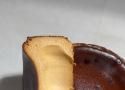
Ingredients
- 1,150 g full-fat cream cheese
- 260 g granulated sugar
- 350 g heavy cream
- 8 large eggs
- 45 g cornstarch
- 1 high-quality vanilla bean or 1 teaspoon vanilla bean paste
- 2 g salt
Instructions
- Preheat the oven to 220°C (430°F), conventional heat, and line a 24 cm cake ring or pan with parchment paper.
- Heat the heavy cream and vanilla in a saucepan until just below boiling.
- Place the sugar in a wide saucepan and caramelize gradually until it reaches a deep amber color.
- Carefully pour the hot cream into the caramel in several additions, stirring continuously. Cook until any hardened caramel has completely dissolved and the sauce is smooth.
- Add the salt and allow the caramel to cool until lukewarm.
- Mix the cream cheese on low speed until smooth. Add the lukewarm caramel and mix until fully combined.
- Gradually add the eggs, mixing on low speed to avoid incorporating air.
- Sift in the cornstarch and mix until the batter is smooth and uniform.
- Strain the batter into the prepared pan and bake for 25–30 minutes, until the top is deeply browned, the edges are set, and the center is still very jiggly.
- Allow the cake to cool completely at room temperature, then refrigerate for at least 8 hours, preferably overnight.
- Slice with a sharp knife for clean, neat portions.
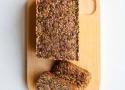
Ingredients
- 1 ½ cups dry steel cut oats
- ½ cup whole flax seeds
- ½ cup pumpkin seeds pepitas
- ½ cup sunflower seeds
- ½ cup quinoa flakes or oat flakes (see notes)
- 3 tablespoons whole psyllium husks
- 1 ½ cups water
- 4 teaspoons apple cider vinegar
- 1 ½ teaspoon salt (optional)
Instructions
- Soak the steel-cut oats: Place the steel-cut oats in a bowl and cover generously with water. Soak for 6 to 7 hours, until the oats are pliable and can be pressed between your fingers but still retain their shape. Do not oversoak. Drain very thoroughly using a fine mesh sieve.
- Combine the dry ingredients: Add the drained steel-cut oats, flaxseeds, sunflower seeds, pumpkin seeds, quinoa flakes, psyllium husk, and salt, is using, to a large bowl. Mix until evenly combined.
- Mix the liquids: In a separate container, stir together the water and apple cider vinegar.
Mix wet with dry: Pour over the oat and seed mixture. Mix thoroughly. Stir very well, making sure the psyllium and liquid are evenly distributed and there are no dry pockets. - Rest: Let the mixture sit for 25 to 30 minutes. This gives the psyllium time to fully hydrate and helps bind the loaf.
- Pack the loaf pan: Transfer the mixture to a nontoxic nonstick or parchment-lined 8 ½ x 4 ½-inch loaf pan. Press the mixture down very firmly and evenly. Compacting the mixture well is important for a loaf that holds together when sliced.
- Bake: Bake on the middle rack at 325°F (163°C) for 90 minutes.
Optional for a firmer crust: Carefully remove the bread from the pan for the final 10 to 15 minutes of baking and place it directly on the oven rack or a baking sheet. - Cool: Let the porridge bread cool completely, preferably on a cooling rack, before slicing. Allow at least 30 minutes so the loaf has time to firm up.

Ingrédients
- 450 g de raisin secs
- 450 g de canneberges séchées
- 225 g d’abricot secs hachés
- 225 g d’ananas secs hachés
- 100 g de zeste d’orange confit
- 1 ou 2 tasses de rhum ou de brandy
- 225 g de cerises glacées
- 225 g de noix de Grenoble hachées
- 225 g d’amandes hachées
- 1 ¼ tasse de mélasse
- 2 culières à café de macis
- 2 culières à café de cannelle
- 2 culières à café de clous de girofle
- 2 culières à soupe de cacao
- 3 ½ tasses de farine
- 1 culières à café de poudre à pâte
- 450 g de beurre
- 450 g de cassonade foncée
- 8 gros œufs
Instructions
- Dans un grand bol, mélanger les raisins secs, les canneberges, les abricots, les ananas, les zestes d’oranges et de citrons et les cerises.
- Couvrir de l’alcool choisi, mettre un couvercle sur le bol et laisser macérer toute la nuit.
- Ajouter les noix et les amandes le lendemain.
- Dans une casserole, mettre la mélasse, les épices et le cacao à chauffer.
- Laisser mijoter 10 minutes puis retirer du feu.
- Battre le beurre jusqu’à ce qu’il devienne léger.
- Incorporer le sucre.
- Continuer de battre jusqu’à ce que le mélanger soit mousseux et que les ingrédients soit bien mélangés.
- Ajouter les fruits et la mélasse et bien remuer.
- Tamiser la farine et la poudre à pâte et battre les œufs légèrement.
- Bien mélanger à la cuillère de bois.
- Verser dans trois ronds et profonds de 24 cm de diamètre, garnis de papier ciré beurré des deux cotés, ou trois moules à poudings de 2 litres bien graissés.
- Placer au centre du four, chauffer à 110 degrés Celsius, pendant 4 ou 5 heures.
- Laisser les refroidir avant de démouler.
- Quand le gâteau est tout à fait froid, le badigeonner d’un peu de rhum ou de brandy.
- Envelopper dans un linge imbibé de rhum ou de brandy et mettre dans un endroit frais.

Ingrédients
- 6 cuisses de canard non gras
- 1 bocal de graisse de canard (400g)
- sel
- poivre du moulin
- 50 cl de bouillon de volaille
- un peu de vin blanc (15cl) + un parfum = l'alcool de votre choix, ici une cuiller à soupe de pineau des Charentes.
- aromates au goût (1 branche d'étoile de badiane, 1/2 cuiller à café de gingembre
en poudre, 1 feuille de laurier, 4 clous de girofle)
Instructions
- Débarassez les cuisses de leur peau, en incisant sous la peau et en tirant dessus.
- Faites-les cuire en cocotte, 3 heures de feu moyen à doux, avec le bouillon de volaille, le vin blanc, l'alcool de votre choix, les aromates pour parfumer.
- Au delà de ce temps lorsque le liquide s'est évaporé, ajoutez la graisse et laissez cuire encore 1.30 heure, les fibres doivent se séparer, aidez-les avec une spatule ou fourchette en bois.
- Laissez-les refroidir à température ambiante.
- Finissez d'écraser la préparation pour obtenir une pâte homogène et remplissez votre terrine en coulant un peu de graisse seule sur le dessus.
- Attendre 24 heures avant de déguster avec du pain au levain, aux céréales, et des cornichons !
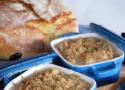
Ingrédients
- 2 lb (1 kg) de flanc de porc ( poitrine de porc ),désossé
- 1 lb (500 g) d'épaule de porc (échine de porc ), désossée
- 1 lb (500 g) de soc de porc (palette de porc ), désossé
- 300 g de gras de dos (gras de bardière)
- 1/2 lb (250 g) de panne de porc
- 400 ml d'eau
- 45 g de gros sel
- Poivre au goût
Instructions
- Couper, le flanc, l'épaule et le soc de porc en morceaux de la grosseur d'une noix.
- Réserver.
- Couper le gras de dos en petits dés et la panne de porc en petits lardons.
- Porter l'eau à ébullition dans un grand chaudron.
- À ébullition, ajouter la panne de porc et laisser fondre pendant 5 minutes.
- Ajouter le flanc, faire rissoler pendant 10 minutes à haute température, remuez à la spatule.
- Ajouter le soc et l'épaule et faire rissoler pendant 10 minutes en remuant.
- Ajouter le gras de dos, faites fondre jusqu'à ébullition.
- Après 1 heure, lorsque le jus et la graisse recouvrent l'ensemble, ajouter le sel et le poivre.
- Couvrir le chaudron, laissez émettre un petit bouillonnement.
- Laissez mijoter 6 heures environ, en remuant régulièrement, afin de bien effilocher la viande.

Ingrédients
- 40 g de graines de moutarde blanche
- 15 g de farine de millet
- 1 zeste de citron
- 4,5 cl d’eau
- 3 cl de vinaigre de cidre
- 3 cl d’huile de colza
- 1,5 cuiller à café de graines de cumin
- 1 cuiller à café de sucre de canne
- 3/4 cuiller à café de graines de poivre vert
- 1/2 cuiller à café de sel fin
Instructions
- Rincer les graines de moutarde, bien égoutter.
- Mettre à tremper dans le vinaigre pendant 2 h.
- Verser les graines avec leur vinaigre de trempage dans le bol d’un mini-hachoir ou d’un broyeur.
- Ajouter les autres ingrédients.
- Mixer jusqu’à obtention de la consistance souhaitée.
- Transférer dans un pot et conserver au réfrigérateur.

Ingrédients
- 150 gr de farine blanche
- 150 gr de sucre blanc
- 40 gr d'amandes amères moulues (sinon amandes normales mondées et moulues)
- 2 c c de levure chimique
- le zeste rapé et le jus d'un demi-citron
- 150 à 200 gr de baies de sureau noir égrenées
- 3 oeufs battus à la fourchette
- 150 gr de beurre fondu
- 1 yaourt nature (125 gr)
- 2 c s d'eau de fleur d'oranger
Instructions
- Dans un grand bol, mélanger la farine, le sucre, les amandes moulues, la levure chimique, le zeste de citron et les baies de sureau, sans les écraser.
- Dans un 2e bol, mélanger les oeufs, le beurre, le yaourt, le jus de citron, l'eau de fleur d'oranger.
- Mélanger ensuite le contenu des 2 bols, et laisser reposer une heure au frais.
- Répartir dans des moules en silicone, et faire cuire 12 à 15 minutes au four préchauffé à 220°.
- Laisser tiédir avant de démouler.
Ingrédients
Pour le sablé
- 1 tasse (120 g) de farine
- 7 cuillères à table (100 g) de beurre salé, ramolli
- 1/2 gousse de vanille
- 7 cuillères à table de sucre démérara
- 2 cuillères à table d’amandes en poudre
- 2 jaunes d’œuf
- 1/2 cuillère à thé de poudre à pâte ( levure chimique )
Pour la compotée de pommes
- 8 pommes évidées et coupées en 6
- 6 cuillères à table de sucre démérara
- 2 moitiés de coings pochés, coupées en lamelles ( recette ici ( clic ) )
- 1/4 tasse ( 60 ml ) de sirop chaud de cuisson des coings
Instructions
Pour le sablé
- Mélanger la farine, la poudre à pâte, les graines de vanille, la poudre d’amande et le sucre.
- «Sabler» les ingrédients secs avec le beurre, c’est-à-dire en roulant la pâte entre les mains (il faut travailler rapidement, pour ne pas faire fondre le beurre), jusqu’à l’obtention d’une pâte à la texture sableuse, mais homogène.
- Ajouter les jaunes d’œufs, pétrir une dernière fois, couvrir la pâte d’un linge propre et laisser reposer 15 minutes au frais.
- Étaler la pâte dans un moule à fond amovible, en la travaillant avec les doigts.
- Cuire au four à 300 F ( 150 C ), de 20 à 25 minutes ou jusqu’à ce que la pâte commence à blondir.
- Laisser refroidir avant de démouler.
Pour la compotée de pommes
- Mettre les pommes à cuire dans une casserole avec un fond d’eau (pour ne pas que ça colle en début de cuisson) et le sucre pendant environ 15 minutes ou jusqu’à ce que les pommes soient compotées.
- Réserver sans les écraser.
Montage
- Étendre les pommes compotées sur la pâte refroidie.
- Ajouter les lamelles de coings sur les pommes, puis badigeonner au pinceau de sirop de cuisson des coings.
Ingrédients
- 4 grosses oranges à peau épaisse
- 2 et 1/2 tasses (500 g ) de sucre
- 4 tasses (1 litre ) d'eau
- 1 tasse ( 200 g ) de sucre pour l'enrobage
Instructions
- Laver et brosser soigneusement les oranges.
- Couper les oranges en quartiers et enlever l'écorce des oranges.
- Sur une planche à découper, détailler les quartiers d'écorce en languettes assez fines d'environ 1/4" (0,5 cm) de largeur.
- Mettre les écorces dans une grande casserole. Les couvrir d'eau froide. Porter à ébullition. Laisser bouillir 5 minutes. Égoutter les écorces.
- Renouveler l'opération : couvrir à nouveau d'eau froide et laisser bouillir 5 minutes.
- Cette opération a pour but d'ôter l'amertume de la peau des oranges.
- Égoutter les écorces et les laisser refroidir dans la passoire.
- Dans un grand chaudron, combiner le sucre et l'eau et porter à ébullition, puis plonger les écorces et laisser frémir 5 minutes.
- Ôter la chaudron du feu et laisser refroidir complètement le sirop en laissant les écorces dedans.
- Renouveler l'opération deux fois, en prenant toujours soin d'attendre le refroidissement complet du sirop.
- Les écorces deviennent alors translucides, elles sont confites. Laisser complètement refroidir.
- Égoutter les écorces sur une grille et les laisser sécher toute une nuit.
- Verser le sucre restant dans un grand saladier.
- Y mettre les écorces par petites quantités et bien enrober avec les doigts.
- Secouer légèrement pour enlever l'excès de sucre.
- Conditionner dans des sacs de cellophane où les écorces d'oranges se conserveront plusieurs mois.

Ingrédients
- 300g de chocolat de bonne qualité
- 20 cl de crème à fouetter à 35%
- environ 50g de beurre de qualité
- cacao amer en poudre
Instructions
- Faire fondre le tout à petit feu, ou au mieux au bain-marie
- Laisser refroidir
- Faire des boulettes et les rouler dans le cacao

Ingrédients
- 190g de chocolat noir
- 150g de crème liquide
- 30g de beurre en pommade
- 25g de miel
- 5cl d'alcool (poire , mirabelle, chartreuse ...)
- nougatine
Instructions
- Tailler la nougatine en petits morceaux.
- Hacher le chocolat à l'aide d'un grand couteau.
- Le réserver dans un bol.
- Porter à ébullition la crème et le miel.
- Verser un tiers du liquide bouillant sur le chocolat, bien mélanger à la spatule ou au fouet, puis ajouter le reste en deux fois.
- Incorporer ensuite le beurre mou, lisser et l'alcool.
- Placer la préparation dans une poche à douille.
- Laisser refroidir.
- Faire ensuite des boules en versant directement un peu de ganache dans le pralin ou le chocolat en poudre.
- Ajouter quelques petits morceaux de nougatine.
- Former une boule bien ronde à la main.
- Réserver au frais dans une boite métallique.
Ingrédients
- 2 tasses (400 ) de sucre
- 1/2 tasse (125 ml) de sirop de maïs blanc ou du glucose
- 3 et 1/3 tasses (830 m ) de crème 35 % chaude
- 1 1/2 tasse (375 g) de beurre salé, à température ambiante
- 2 c. à café de fleur de sel
Instructions
- Remplir le fond de l'évier d'eau froide.
- Dans une casserole à fond épais et haute de 5 litres, combiner le sucre et le sirop de maïs.
- Cuire en remuant jusqu'à ce que la température atteigne 365 F (185 C) sur le thermomètre à bonbon.
- Aussitôt la température atteinte, déposer le fond de la casserole dans le bain d'eau froide pour arrêter la cuisson.
- Ajouter peu à peu la crème chaude en remuant, la température réduira.
- Poursuivre la cuisson jusqu'à 225 F (108 C) en remuant.
- Laisser refroidir jusqu'à 104 F (40 C).
- Incorporer le beurre en brassant vigoureusement à l'aide d'une cuillère en bois.
- Ajouter la fleur de sel et mélanger.
- Remplir des bocaux et conserver au réfrigérateur.

Ingrédients
- 400g de lait concentré sucré (1 boîte)
- 250g de noix de coco râpée (2 sachets)
- 200g de chocolat (j'ai utilisé du chocolat au lait à pâtisser, Nestlé, impeccable)
- 30g de beurre
Instructions
- Verser la noix de coco et le lait concentré sucré dans un saladier. Bien mélanger.
- Répartir dans des petits moules rectangulaires en silicone (ou bien faire des boudins ou des bâtonnets à la main) sur une épaisseur d'environ 1,5cm.
- Mettre au réfrigérateur pendant 12 heures (pour que la pulpe de coco s'imprègne bien du lait concentré).
- Mettre au congélateur pendant 12 heures (pour faciliter le démoulage).
- Faire fondre le chocolat et le beurre au bain-marie (ou, comme moi, au micro-ondes), mélanger jusqu'à ce que le tout soit bien lisse. Si ce chocolat est trop épais, incorporer une cuillère à soupe de lait.
- Démouler les barres de coco.
- Plonger les bâtons de coco un par un dans le chocolat, bien les enrober, sortir à l'aide d'une fourchette, et laisser figer sur du papier sulfurisé (ou alu, à défaut).
- Réfrigérez vos Bounty si vous êtes vraiment très pressé(e) de les dévorer.
- axeloz/filesharing: Self-hosted files sharing application, easy to setup, easy to use
- ErugoOSS/Erugo: A powerful, self-hosted file-sharing platform built with PHP and Laravel with a Vue.js frontend. It offers secure, customizable file-transfer capabilities through an elegant user interface, giving you complete control over your data while providing a seamless experience for both senders and recipients.
- Travel wallet
- Passport holder
- Toiletry bag
- TSA-approved liquids bag and compliant containers
- Prescription medications
- Glasses case
- Travel pillow
- Packing cubes
- Valuables
- Tech organizer
- Luggage tracker
- Zippered pouches and reusable silicone bags
- Mini clip bag
- Hand sanitizer
- Lip balm
- Bluetooth wireless adapter
- Wired earbuds or headphones
- E-reader or a great book
- Eye mask
- Snacks
- Power bank
- Travel adapter/converter
- Travel first-aid kit
- Reusable water bottle
- Activities or games
- Light jacket
- Change of clothing