




- Sewing Tutorials How to Add a Lining to Any Sewing Pattern (Even When the Pattern Doesn't Include One) If you're working on a sleeveless garment without button closures, the burrito method creates the cleanest possible finish by essentially rolling the fabric out of the way as you work September 26, 2025
- Sewing Tutorials How to do the Burrito Method on a Lined Yoke The burrito method is a little bit of sewing magic when sewing certain kinds of linings. What’s the burrito method? January 16, 2023
- Sewing Tutorials How to do the Burrito Method on a Sleeveless Garment In part 2 of the burrito method series, we’ll show you how to use this technique on a sleeveless garment. January 23, 2023
- Sewing Tutorials How to Sew a Lining Using the Burrito Method The burrito method is easy when you follow these steps. ... The " burrito method" may seem complicated, but once you learn how to do it, it'll feel like magic! November 20, 2020
- Sewing Tutorials Seamwork's Best Sewing Techniques How to do the Burrito Method on a Lined Yoke: Use this sewing magic trick to get a clean finish on lined yokes. November 14, 2024

Kitchen work is all about proportions: sometimes the recipe is for four servings but you need six; maybe the recipe calls for 80 g of butter but you only have 57 g, so you have to adjust the other ingredients to match.
We could use an electronic calculator to figure out the rescaled amounts, but a slide rule makes it so much easier. The picture above was taken while following a recipe that called for 2 tsp of baking powder, and I wanted to make as large a batch as I could given the remaining 3.3 tsp of baking powder I had – a proportion of 2:3.3. You can see the slide rule is set to a proportion of 2:3.3 because – if you open the image in a new tab to make it larger – the number 2 on the C scale (on the bottom of the sliding middle part) is above 3.3 on the D scale just below.
But wait, the number 1 on the C scale is also just above 1.65 on the D scale. And 14 (or, if you will, 1.4, since with slide rules we ignore decimal points) on the C scale is above 23.1 on the D scale. Indeed. It’s set to those proportions too, because they are the same proportion. This is what makes the slide rule so powerful.
Once the slide rule is set to the constraining proportion, in this case 2:3.3, we can instantly read off all other amounts from it with no additional manipulation. If the recipe calls for three cups of flour, we’ll find 3 on the C scale and look what’s below it on the D scale: seems like we need 4.95 cups of flour. The recipe says 25 g of butter: we’ll take what’s under 25 on the C scale, i.e. 41.25 g. Having set the slide rule once, it then serves as a custom scaling table for the rest of the recipe.
Kitchen work is all about proportions, and nothing beats the slide rule for proportions. The reason I write this article is I just found myself in someone else’s kitchen and they didn’t have a slide rule. Only then did I realise how much I take my kitchen slide rule for granted.
Bakers understand the importance of proportions in cooking; they even write their recipes normalised to the weight of flour, meaning all other ingredients are given in proportion to the amount of flour. This makes it easier to compare recipes, too, because when they are normalised to the weight of a common ingredient, it is easier to see which recipe is sweeter, saltier, umamier, etc.
We can use the slide rule to scale recipes while cooking, but we can also use it when learning to cook something new, by taking a hint from the bakers. We look at multiple recipes and – using the slide rule – write up a table with the relative proportions of each ingredient in each recipe. This lets us see which ingredient amounts must be precise (they vary little between recipes) and which are added mainly to taste (they vary more between recipes.) Here’s an example for regular basil pesto:
| Ingredient | 1 | 2 | 3 | 4 | 5 | 6 |
|---|---|---|---|---|---|---|
| Olive oil (cups) | 0.5 | 0.5 | 0.5 | 0.5 | 0.5 | 0.5 |
| Pine nuts (cups) | 1 | 0.3 | 0.2 | 0.5 | 0.3 | 0.5 |
| Basil (cups) | 4 | 2 | 0.6 | 3 | 2 | 2 |
| Parmesan (cups) | 0.5 | 0.5 | 0.4 | 0.5 | 0.3 | 0.7 |
| Garlic (cloves) | 1 | 3 | 4 | 4.5 | 2 | 2 |
| Lemon (tbsp) | 4 | − | − | 0.5 | 1 | 3 |
Although the coefficient of variation is quite high for all ingredients, it seems that pine nuts, basil leaves, garlic, and lemon juice are all added to taste, whereas the parmesan is important for the structure of the pesto.
Everyone should have a slide rule in their kitchen drawers. I’m honestly surprised it is not standard equipment. Once set up, it’s a mess-free, multitasking-friendly way to achieve instant calculations with almost no work.
J'ai testé. À reproduire !

Ingrédients
- 4 à 5 citrons non traités
- 1 beau morceau de gingembre frais bio (avec la peau)
- 60g de sucre
- 1L d’eau non chlorée
Instructions
- Presser les citrons, les placer dans un bocal avec le gingembre en morceaux, le sucre, puis recouvrir d’eau non chlorée.
- Bien mélanger, fermer le bocal, et laisser fermenter 3 à 5 jours à température ambiante (au-dessus de 20°C si possible).
- Remuer une fois par jour pour faire entrer les levures de l’air, qui favorisent la fermentation. Des petites bulles devraient apparaître : signe que ça prend vie !
- Filtrer la boisson, puis la transvaser dans une bouteille hermétique (type limonade) pour une seconde fermentation de 2 à 4 jours.
- Penser à dégazer quotidiennement pour éviter toute explosion ou geyser à l’ouverture !
- Placer au frais, et déguster bien frais.
Note c'est bon mais c'est très amer. À tester à l'orange pour voir si c'est mieux.

Fromages faciles
Autres styles
Styles légèrement plus complexe
Styles à plus long affinage



Ingrédients
Pâte sablée
- 125g de farine
- 1 pincée de sel
- 60g de beurre
- 25g de sucre
- 1 jaune d'œuf
- eau
Garniture
- 2 œufs
- 20cL de bière ambrée ou blonde
- 180g de vergeoise
- 30g de beurre
Instruction
Pâte sablée
- Mélanger le beurre mou coupé en cubes avec la farine et le sel et sabler à la main ou au robot avec la feuille
- Ajouter le sucre puis le jaune d'œuf
- Si besoin, ajouter de l'eau jusqu'à obtenir une boule lisse non collante
- Laisser 10 min au frigo et étaler dans le moule couvert de papier cuisson
- Placer au congélateur 30 min afin que les bords ne retombent pas
- Piquer et précuire la pâte à blanc pendant 10 min à 190°C
- S'il y a un surplus, préparer des motifs de décoration
Garniture
- Étaler la vergeoise sur la tarte précuite
- Mélanger les œufs et la bière et verser sur la tarte
- Enfourner 10 min à 210°C
- Sortir la tarte et repartir le beurre coupé en petits morceaux
- Poser les décorations en pâte s'il y en a
- Poursuivre la cuisson env. 20 min jusqu'à ce que la tarte soit bien dorée


Ingrédients
Garniture
- 250 ml (1 tasse) de mélasse
- 250 ml (1 tasse) de cassonade
- 3 œufs battus
- 250 ml (1 tasse) de lait
- 30 ml (2 c. à soupe) de beurre
- 5 ml (1 c. à thé) de jus de citron
- 30 ml (2 c. à soupe) de fecule de maïs
- 250 ml (1 tasse) de raisins secs
Pâte brisée
- 800 ml (3¼ tasses) de farine à pâtisserie
- 5 (1 c. à the) de sel
- 250 ml (1 tasse) de graisse végétale
- 125 ml (½ tasse) d'eau glacée
Instructions
- À feu moyen, faire chauffer la mélasse, la cassonade, les œufs, le lait, le beurre et le jus de citron.
- Épaissir avec la fécule de mais.
- Ajouter les raisins.
- Vider le tout dans une abaisse non cuite.
- Faire cuire au four à 175°C (350"F) pendant 35 à 40 minutes.
Pâte brisée
- Tamiser la farine et le sel.
- À l'aide d'un couteau enfariné, couper la graisse en petits morceaux; continuer à mélanger tout en coupant (ainsi, la pâte ne deviendra pas élastique).
- Arroser d'eau glacée et continuer de couper jusqu'à ce que la pâte "boule bien", sans coller aux doigts.


- {Tuto} Mon frigo de séchage à viandes - Cook'n'Roll
- Ail noir - Cook'n'Roll
- Boeuf Irlandais séché au piment doux - Cook'n'Roll
- Canard séché au Comté - Cook'n'Roll
- Filet de canard séché au foie gras - Cook'n'Roll
- Foie gras mi-cuit au chocolat - Cook'n'Roll
- Pastirma - viande séchée aux épices - Cook'n'Roll
- Porc séché - Cook'n'Roll
- Porc séché au frigo, comme une coppa - Cook'n'Roll
- Thon séché - Cook'n'Roll
Un blog que je viens de découvrir. Ça a l'air vraiment très bien !

- Mont Gosford, Cantons-de-l’Est / 1193 mètres
- Mont Mégantic, Cantons-de-l’Est / 1105 mètres
- Mont Saint-Joseph, Cantons-de-l’Est / 1065 mètres
- Pic Dubuc, Saguenay – Lac-Saint-Jean / 984 mètres
- Mont du Lac-des-Cygnes, Charlevoix / 980 mètres
- Round Top, Cantons-de-l’Est / 962 mètres
- Pic Johannsen, Laurentides / 968 mètres
- Mont Saint-Magloire, Chaudière-Appalaches / 917 mètres
- Ex Aequo : Mont Tremblant, Laurentides - Montagne Noire, Lanaudière / 875 mètres
- Mont Kaaikop, Laurentides / 838 mètres
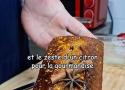
Ingrédients
- 1 càc d'anis vert
- 1 càc de clou de girofle
- 2 étoiles de badiane
- 1 baton de cannelle
- 125 ml de lait
- 250 ml de miel
- 125 g de beurre
- 250 g de farine
- 1 sachet de levure chimique
- 80 g de sucre cassonade
- 2 œufs
Instructions
- Réduire en poudre les quatre épices.
- Torréfier 1 càc de 4 épices pendant quelques secondes.
- Ajouter le lait, le miel et le beurre coupé en dés.
- Chauffer jusqu'à ce que le beurre soit fondu.
- Mélanger la farine, la levure chimique et le sucre.
- Une fois refroidi, ajouter le mélange épicé au mélange de farine.
- Ajouter les œufs.
- Verser dans un moule à cake chemisé.
- Enfourner à 170°C pendant 50 minutes.
How is wool clothing so warm while still being lightweight?
One of the main reasons wool keeps you warm is that it doesn’t pull heat away from your body. In other words, wool is a poor conductor of heat. This might sound odd, but it’s actually a good thing. Conduction is the primary way that heat transfers from one material to another, and something that you witness every day: like a skillet conducting heat from a stove-top. Due to the physical properties of wool, it doesn’t absorb the heat that your body works so hard to produce when it’s cold outside. So you stay warm instead of your clothing. At the same time, wool fabric is a power insulator. Humans have recognized the insulating abilities of sheep’s wool for more than 10,000 years. The cellular and chemical structure of individual wool fibers makes this magic happen. Because wool fibers have natural kinks and bends, they trap air to keep your body warm. Wool is so well-regarded for its heat-trapping powers that it’s even used in homes and buildings as sustainable, recyclable insulation.
Does merino wool actually generate heat?
Yes. Merino wool is one of the rare fabrics that can generate heat while it dries. When a wool garment gets wet, water is adsorbed, meaning it gets trapped in wool’s porous fibers. Inside the fibers, the hydrogen bonds in water break down. This creates a chemical reaction that generates heat. Experiments have found through this process, one kilogram of merino wool can produce as much heat over eight hours as an electric blanket.
Why does wool handle water so well?
Wool’s natural water-resistance and ability to wick away moisture are among its most impressive qualities, and, to many, its biggest enigma. The main thing to know is that wool adsorbs (yes, adsorbs not absorbs, that’s different) moisture. Adsorption means that water molecules get trapped in the naturally porous fibers of the fabric versus absorption where water molecules permeate the fabric and are wet to the touch. For wool, because the water is trapped, your garments don’t feel especially wet against your skin even when they’re soaked. But what happens to that moisture next?
Remember wool’s incredible ability to generate heat? Inside the fibers, water condenses and releases heat. Meanwhile, the outer layers of individual wool fibers shed water and release moisture into the air as vapor. The mechanisms behind this natural process of water adsorption and evaporation can get pretty complicated. It all happens thanks to the combination of wool’s cellular structure, biophysical qualities, and chemical properties. Overall, the important thing for you to know is this: your wool garments will keep you dry and comfortable by pulling moisture away from your skin and allowing the moisture to evaporate quickly.
So, how much water can merino wool really adsorb?
Wool has been shown to adsorb 30 percent of its weight in water. That’s a lot of water! Even after adsorbing that much moisture, wool fabrics still won’t feel clammy or wet to the touch. This fantastic quality of wool clothing gives you extra assurance that you’ll stay comfortable no matter what conditions you encounter—rain, snow, falling into a puddle, you name it. The heat that wool generates while it dries will insulate your body, keeping you warm even while your layers are wet. This incredible feature of wool can prevent or delay hypothermia in extreme conditions.
Cotton, on the other hand…
Cotton reacts to moisture very differently than wool. Cotton fabrics soak up as much moisture as possible, and the fibers remain wet on the inside and the outside for much longer than wool. The wet cotton clothing will conduct, or pull, warmth away from your body, unlike wool.
Is wool fire-resistant?
Yes. Wool textiles are renowned for their fire-resistance and self-extinguishing capabilities. Due to the structure and chemical make-up of wool fibers, they don’t catch fire readily. Simply put, wool fibers require more oxygen than is available in the environment to burn. Wool textiles have a high ignition temperature around 570-600° C.
Even when a strong fire contacts wool, the material doesn’t typically support flames. Instead, it smolders for a generally short amount of time before self-extinguishing. Unlike synthetic fabrics such as polyester, wool doesn’t melt, drip, or stick to the skin when it burns. Similarly, if it does catch fire, wool won’t emit toxic gas. Plus, it will produce less smoke than other fabrics. All of these fire-safe qualities stem from the fact that pure wool is made up of 100% natural proteins.
How does wool resist odor?
When you’re in the back-country for days without access to a shower, you’ll appreciate that wool clothes resist the build-up of odors. As wool wicks sweat from the body, it inherently rejects bacteria, which is what causes odor as well as infections like foot fungus. When you wear merino wool socks and clothing, you can use them repeatedly over a long period and work up a sweat without worrying about odors or bacteria collecting. You won’t need to wash wool garments as frequently as synthetic clothes, and you can freshen up wool clothes by airing them out. With its ability to fight odors and keep you warm and dry, wool truly is a remarkable material. Fortunately, companies like Minus33 have expanded their wool offerings. By using soft merino wool, companies are not only producing sweaters and other mid-layer pieces but also pieces that feel soft against the skin, like underwear and T-shirts. Over the past few decades, product wizards have created remarkable hi-tech clothing out of synthetic materials. Still, few of these things can match the science and performance of all-natural wool.