Ingredients
- 1 cup butter
- 1 cup brown sugar
- 1 cup white sugar
- 2 eggs
- 1 tsp vanilla
- ¾ tsp salt
- 1 tsp baking soda
- 2 cups flour
- 1 cup chocolate chips
Instructions
- Melt butter in a cast iron.
- Turn off the heat
- Add remaining ingredients and mix.
- Bake on 325°F for 25 minutes.
Testé. Ce n'est pas concluant.

Ingredients
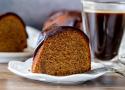
Coffee Bundt Cake
- 3 cups all-purpose flour (375 grams)
- 1 teaspoon baking powder
- ½ teaspoon baking soda
- ¼ teaspoon salt
- ½ cup unsalted butter (112 grams) softened
- ½ cup vegetable oil (120 ml) or canola
- 2 cup light brown sugar* (400 grams) packed
- 4 large eggs room temperature
- 1 cup sour cream (240 ml) room temperature
- 3 tablespoons instant coffee powder feel free to use 2 tablespoons for a less intense flavor
- 2 tablespoons hot water (30 ml)
Chocolate Ganache
- 4 ounces dark chocolate (112 grams) around 50%, or feel free to use semi-sweet`
- ½ cup heavy cream (120 ml)
Instructions
Coffee Bundt Cake
- Preheat the oven to 350F (180C or 160C fan forced).
- Whisk together the flour, baking powder, baking soda and salt.
- In a very large mixing bowl, beat together the butter, brown sugar and oil until creamy (seeing sugar granules is fine).
- Beat in the vanilla extract and eggs 1 at a time. Stop mixing when you no longer see pieces of egg in the batter.
- Turn off the mixer and scrape down the sides and bottom of the bowl. Add in about 1/2 of the flour mixture and beat on a low speed until just combined.
- Add the coffee grounds to the hot water int a small cup or bowl and stir. Add the coffee and sour cream to the cake batter and mix with the beater on a low speed until combined.
- Turn off the mixer and add in the rest of the flour mixture. With a hand held whisk, whisk until smooth.
- Brush a non-stick bundt pan with pan release/cake goop or grease and lightly dust with flour.
- Pour the batter into the prepared pan.
- Bake in the preheated oven for 45-55 minutes, or until an inserted toothpick comes out clean.
- Let the cake cool in the pan for about 15 minutes, then carefully invert the pan and slide the cake out.
Chocolate Ganache
- Chop the chocolate into very fine pieces and place in a heatproof bowl.
- Heat the cream until almost boiling.
- Pour the hot cream over the chopped chocolate. Let sit for 3-5 minutes, then whisk until smooth.
- If there are still some lumps of chocolate, microwave for 30-second intervals at medium heat (not high heat, which is often the default) and whisk between each interval until smooth.
Assembly
- If the bottom of the cake is very domed (what was the top while the cake was baking), gently saw off the rounded top using a serrated knife.
- Place the cake on a plate or cake stand that you plan to serve it on.
- Pour/drizzle the chocolate ganache over top, letting it drip over the sides.
J'ai testé. À reproduire !
Ingrédients
Pâte sablée
- 125g de farine
- 1 pincée de sel
- 60g de beurre
- 25g de sucre
- 1 jaune d'œuf
- eau
Garniture
- 2 œufs
- 20cL de bière ambrée ou blonde
- 180g de vergeoise
- 30g de beurre
Instruction
Pâte sablée
- Mélanger le beurre mou coupé en cubes avec la farine et le sel et sabler à la main ou au robot avec la feuille
- Ajouter le sucre puis le jaune d'œuf
- Si besoin, ajouter de l'eau jusqu'à obtenir une boule lisse non collante
- Laisser 10 min au frigo et étaler dans le moule couvert de papier cuisson
- Placer au congélateur 30 min afin que les bords ne retombent pas
- Piquer et précuire la pâte à blanc pendant 10 min à 190°C
- S'il y a un surplus, préparer des motifs de décoration
Garniture
- Étaler la vergeoise sur la tarte précuite
- Mélanger les œufs et la bière et verser sur la tarte
- Enfourner 10 min à 210°C
- Sortir la tarte et repartir le beurre coupé en petits morceaux
- Poser les décorations en pâte s'il y en a
- Poursuivre la cuisson env. 20 min jusqu'à ce que la tarte soit bien dorée

Ingrédients
Garniture
- 250 ml (1 tasse) de mélasse
- 250 ml (1 tasse) de cassonade
- 3 œufs battus
- 250 ml (1 tasse) de lait
- 30 ml (2 c. à soupe) de beurre
- 5 ml (1 c. à thé) de jus de citron
- 30 ml (2 c. à soupe) de fecule de maïs
- 250 ml (1 tasse) de raisins secs
Pâte brisée
- 800 ml (3¼ tasses) de farine à pâtisserie
- 5 (1 c. à the) de sel
- 250 ml (1 tasse) de graisse végétale
- 125 ml (½ tasse) d'eau glacée
Instructions
- À feu moyen, faire chauffer la mélasse, la cassonade, les œufs, le lait, le beurre et le jus de citron.
- Épaissir avec la fécule de mais.
- Ajouter les raisins.
- Vider le tout dans une abaisse non cuite.
- Faire cuire au four à 175°C (350"F) pendant 35 à 40 minutes.
Pâte brisée
- Tamiser la farine et le sel.
- À l'aide d'un couteau enfariné, couper la graisse en petits morceaux; continuer à mélanger tout en coupant (ainsi, la pâte ne deviendra pas élastique).
- Arroser d'eau glacée et continuer de couper jusqu'à ce que la pâte "boule bien", sans coller aux doigts.


Ingredients
- 1 ¼ cups sifted all-purpose flour
- 1 teaspoon salt
- 2 sticks (8 ounces) unsalted butter
- 4 ounces unsweetened chocolate, coarsely chopped
- 2 ounces bittersweet chocolate, coarsely chopped
- 2 cups sugar
- 1 teaspoon pure vanilla extract
- 4 large eggs
Instructions
- Center a rack in the oven and preheat the oven to 350 degrees.
- Sift the flour and salt together and set aside.
- Melt the butter and chocolate together in a medium saucepan over low heat, stirring frequently and keeping a watchful eye on the pot to make certain the chocolate does not scorch. Add 1 cup of the sugar to the mixture and stir for half a minute, then remove the pan from the heat and stir in the vanilla. Pour the mixture into a large bowl.
- Put the remaining 1 cup sugar and the eggs into the bowl of a mixer and whisk by hand just to combine. LIttle by little, pour half the sugar and eggs into the chocolate mixture, stirring gently but constantly with a rubber spatula so that the eggs don't set from the heat. Fit the whisk attachment to the mixer and whip the remaining sugar and eggs until they are pale, thick, and doubled in volume, about 3 minutes. Using the rubber spatula, delicately fold the whipped eggs into the chocolate mixture. When the eggs are almost completely incorporated, gently fold in the dry ingredients.
- Pour and scrape the batter into an unbuttered 9-inch square glass or ceramic pan. Bake the brownies for 25-28 minutes, during which time they will rise a little and the top will turn dark and dry. Cut into the center at about the 23-minutews mark to see how they are progressing. They will be perfect if they are just barely set and still gooey. Cool the brownies in the pan on a rack. Cut into bars and serve.
- The brownies will keep, covered, for 2-3 days at room temperature and can be frozen for up to a month!
C'est très bon. Les gouteurs ont été unanimes.
Ingrédients
Pour la macération des fruits
- 30 g d'amandes , mondées et grossièrement hachées
- 30 g de noisettes , pelées et grossièrement hachées
- 30 g de noix , grossièrement hachées
- 30 g d'écorce d'orange confite , hachée
- 30 g de zeste de citron confit , haché
- 50 g de pruneaux (dénoyautés), émincés
- 2 cuillères à soupe de café instantané (dissout dans 1 cuillère à soupe d'eau chaude)
- 2 cuillères à café d’extrait naturel de vanille
- ¼ cuillère à café de clou de girofle moulu
- ¼ cuillère à café de cannelle moulue
- ¼ cuillère à café de noix de muscade râpée
- ¼ cuillère à café de gingembre frais râpé
- ½ cuillère à café de zeste d'orange
- ½ cuillère à café de zeste de citron
- 250 ml de rhum
- 100 ml de vin rouge doux
- 60 ml de mélasse noire
Pour le gâteau
- Fruits macérés précédemment préparés , égouttés
- 175 g de beurre mou
- ¼ cuillère à café de sel
- 150 g de sucre en poudre
- 6 oeufs
- 500 g de farine , tamisée
- 1 cuillère à café de levure chimique
Instructions
Macération des fruits
- Faire mariner le mélange au moins 15 jours avant le jour de la préparation.
- Verser tous les ingrédients dans un récipient en verre pouvant être bien couvert. Déposer au réfrigérateur.
- Remuer de temps en temps et ajouter du rhum et du vin si le mélange sèche.
Gâteau
- Environ 3 heures avant le début de la préparation du gâteau, sortir la macération des fruits du réfrigérateur et la réserver pour qu’elle atteigne la température ambiante.
- Égoutter les fruits est réserver le liquide de macération.
- Préchauffer le four à 190˚C.
- Graisser et fariner un moule rond d'environ 25 cm de diamètre et 8 cm de profondeur, ou un moule rectangulaire d'environ 22 x 12 x 8 cm.
- Dans le bol d'un batteur électrique, déposer le beurre et le sel et battre jusqu'à obtenir la consistance d’une crème.
- Ajouter le sucre et continuer à battre pendant environ 5 minutes.
- Ajouter les œufs un à un et battre pendant 5 minutes.
- Séparément, mélanger la farine et la levure chimique.
- À l’aide d’une spatule, incorporer alternativement un peu de farine et un peu de fruits macérés en remuant délicatement jusqu’à incorporation totale de la farine.
- Bien mélanger et verser l’appareil dans le moule.
- Enfourner et cuire au four pendant 50 minutes ou jusqu'à ce qu'un cure-dent soit inséré et en ressorte sec. Il pourrait être nécessaire de couvrir le moule à la fin pour que le gâteau ne brunisse pas trop.
- Sortir le gâteau du four et le laisser reposer 5 minutes avant de le démouler sur une grille.
- Arroser le gâteau du liquide de macération réservé avant de le déguster.
INGRÉDIENTS
Pâte
- 70 g (1/2 tasse) de farine tout usage La Merveilleuse
- 2,5 ml (1/2 c. à thé) de poudre à pâte
- 0,5 ml (1/8 c. à thé) de sel
- 110 g (1/2 tasse) de sucre de canne
- 1 gros oeuf, battu (55 g)
- 30 ml (2 c. à soupe) de margarine végétale, fondue
- 30 ml (2 c. à soupe) de boisson végétale, au goût
- 5 ml (1 c. à thé) d'essence de vanille
Garniture
- 240 g (3/4 tasse) de sirop d'érable
- 55 g (1/4 tasse) de sucre de canne
- 2 gros oeufs (110 g)
- 35 g (1/4 tasse) de margarine végétale
- 30 ml (2 c. à soupe) de farine tout usage La Merveilleuse
- 2,5 ml (1/2 c. à thé) d'essence de vanille
- 1 ml (1/4 c. à thé) de sel
- 65 g (2/3 tasse) de pacanes, hachées
Instructions
Pâte
- Préchauffer le four à 150 °C (300 °F). Huiler un moule carré de 20 cm (8 po) et déposer un papier parchemin au fond.
- Dans un bol, mélanger la farine, la poudre à pâte et le sel. Réserver.
- Dans un moyen bol, combiner le sucre, l’œuf, la margarine, la boisson végétale et l’extrait de vanille. Mélanger le tout à l’aide d’une cuiller de bois jusqu’à ce que le mélange soit lisse et crémeux.
- Ajouter le tiers des ingrédients secs à la fois en mélangeant entre chaque addition, jusqu’à l’obtention d’une pâte homogène.
- Répartir également la pâte dans le moule et placer sur la grille centrale du four afin de précuire pendant 15 minutes, sans plus. Retirer du four et réserver.
Garniture
- Verser le sirop d'érable dans une moyenne casserole, incorporer le sucre de canne et amener à ébullition. Laisser mijoter à feu doux pendant 5 minutes. Retirer du feu et laisser tiédir pendant 30 minutes puis préchauffer le four à 230 °C (450 °F).
- Après le temps de repos du sirop d’érable, verser doucement les œufs sur le sirop en battant constamment à l'aide d'un batteur électrique.
- Incorporer la margarine végétale, la farine, l'extrait de vanille et le sel et battre, toujours à l'aide d'un batteur électrique, jusqu'à l'obtention d'un mélange crémeux et onctueux (environ 3 à 4 minutes).
- Verser sur la pâte pré-cuite et parsemer le dessus de pacanes.
- Cuire sur la grille centrale du four préchauffé tel qu'indiqué au point 1 pendant 10 minutes. Baisser ensuite la température à 180 °C (350 °F) et poursuivre la cuisson pendant 15 à 20 minutes. Les carrés seront prêts lorsqu'ils seront bien dorés
- Si la croûte semble manquer légèrement de cuisson mais que le dessus est bien cuit, simplement couvrir d'un papier parchemin pour les 5 dernières minutes de cuisson. Cela permettra à la croûte de bien cuire sans trop griller le dessus.
- Laisser refroidir complètement avec de couper en carrés.
Ingredients
- 750g full-fat cream cheese (at room temperature)
- 240g caster sugar
- 20g chocolate powder
- 150g dark (70%) chocolate
- 3 whole eggs (at room temperature)
- 300ml double cream (at room temperature)
- 1/4 teaspoon fine sea salt
- 2 tsp whisky (optional)
Instructions
- Preheat the oven to 230°C (450°F).
- In a bowl, beat the cream cheese and caster sugar using an electric hand mixer until smooth.
- Add the eggs one at a time, mixing well after each addition until fully combined.
- Gradually pour the melted chocolate into the double cream while mixing. Stir in the whisky at
this stage. - Pour the chocolate-whisky cream mixture into the bowl with the cream cheese mixture and
blend everything together. - Add the salt and cocoa powder, then mix until smooth.
- Line a 20cm springform pan with parchment paper. Pour the batter into the pan and gently tap
it on the countertop a few times to release any air bubbles. - Bake the cheesecake uncovered for 35 minutes, or until the top is slightly charred. Avoid
opening the oven door during baking. - Once the cheesecake has cooled for 3 to 4 hours, serve or transfer it to the fridge.
J'ai testé mais je ne referai pas. C'est plus écœurant que l'original et on ne goûte pas le whisky.
Ingredients
COOKIES
- 110 g butter
- 100 g granulated sugar
- 100 g dark brown sugar
- 1 egg (57-60 g with shell)
- 1 teaspoon vanilla extract
- 230 g all-purpose flour
- ½ teaspoon baking powder
- ½ teaspoon baking soda
- 1 tablespoon instant espresso powder
- ½ teaspoon salt
MASCARPONE CREAM
- 180 g mascarpone cheese
- 1 teaspoon vanilla extract
- 90 g confectioners sugar
- 20 g agave or honey
- 120 g heavy cream
- 1 tablespoon cocoa powder for dusting
Instructions
COOKIES
- Melt the butter in the microwave or in a small saucepan over low-medium heat. You don’t want it to bubble, so as to not lose any of the liquid in the butter. Pour the melted butter into a big mixing bowl and let it cool down to room temperature in the fridge. Takes about 20 minutes.
- Once the butter has reached room temperature add the granulated sugar and brown sugar and with spatula whisk it together for 1 minute. Alternatively, mix it together in a stand mixer using the paddle attachment.
- Add the egg, vanilla extract and mix it in until combined.
- In a separate bowl, stir together flour, baking powder, baking soda, instant espresso powder and salt. Add the dry ingredients to the wet mixture and with spatula mix it together until just combined.
- Using a 2 tbsp/ 1.3 ounce cookie scoop, scoop out 11 cookies and place them on a tray lined with baking paper. Then roll them between your hands into a ball. Place the prepared cookies in the fridge to set for 1 hour.
- Meanwhile, preheat the oven at 180ºC / 355ºF and prepare a baking sheet with baking paper. Place 6 cookies per baking tray and bake one tray at a time for 10-11 minutes.
- Once baked, let them cool down on the baking tray for 3 minutes as they still will be soft when they are done. After they have cooled down a bit, use a spatula to lift them onto a cooling rack and let them cool down completely.
MASCARPONE CREAM
- In a medium bowl with an electric mixer or in a stand mixer using the whisk attachment, whip together all of the ingredients until it reaches stiff peaks and it holds its shape. If making ahead of serving, place in the fridge, covered by plastic wrap, until ready to assemble.
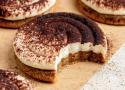
- When ready to serve, add the cream to a piping bag fitted with a piping tip e.g. Wilton 2A. Pipe the mascarpone cream on top of the cookies in a swirl, starting from the middle and moving outwards. Add a tablespoon of cocoa to fine mesh sieve and finish the cookies with dusting of cocoa powder.
Ingrédients
Gâteau
- 3 tasses (750 ml) de farine
- 1 cuillère à thé (5 ml) de bicarbonate de soude
- 2 cuillères à thé (10 ml) de cannelle
- 1/2 cuillère à thé (2,5 ml) de muscade
- 1/2 cuillère à thé (2,5 ml) de sel
- 1 tasse et demie (375 ml) d’huile végétale
- 1 tasse et demie (375 ml) de sucre
- 1/2 tasse (125 ml) de cassonade
- 3 œufs
- 2 cuillères à thé (10 ml) d’extrait de vanille
- 3 grosses pommes rouges du Québec, pelé et coupé en gros morceaux
- 1 tasse (250 ml) de noix de Grenoble (optionnel)
Glaçage
- 3 cuillères à soupe (45 ml) de beurre
- 3 cuillères à soupe (45 ml) de cassonade
- 3 cuillères à soupe (45 ml) de sucre
- 3 cuillères à soupe (45 ml) de crème
- 1/4 de cuillère à thé d’extrait de vanille
Instructions
- Préchauffer le four à 325 °F (162 °C).
- Bien graisser un moule à gâteau de type Bundt ayant une contenance de 12 tasses.
- Dans un grand bol, mélanger la farine, le bicarbonate de soude, la cannelle, la muscade et le sel. Passer au tamis.
- Dans le bol de votre mélangeur, combinez l’huile, le sucre et la cassonade et bien mélanger.
- Ajouter un œuf à la fois et bien mélanger entre chaque. Ajouter la vanille et mélanger à nouveau.
- Ajouter les ingrédients tamisés au mélange liquide et bien mélanger jusqu’à homogénéité.
- Ajouter les pommes et les noix. Bien mélanger.
- Verser le mélange dans le moule à gâteau.
- Faites cuire pendant 1 heure et 15 minutes ou jusqu’à ce que le gâteau passe le test du cure-dent.
- Retirez du four et laissez reposer.
- Pendant ce temps, préparer le glaçage en faisant chauffer tous les ingrédients dans un petit chaudron à feu moyen et en mélangeant. Porter à ébullition pendant 1 minute.
- Retirer le gâteau du moule et verser le glaçage dessus.
- Mettre au réfrigérateur pour que le glaçage prenne.
Ingredients
Cookie crust
- 250 g graham cookies or Digestives cookies
- 2 tablespoon dutch processed unsweetened cocoa powder
- 75 g butter
Cheesecake filling
- 250 ml strong black coffee
- 1 tablespoon Amaretto optional
- 600 g cream cheese
- 165 g mascarpone cheese
- 150 g powdered sugar
- 1½ teaspoon vanilla paste
- 360 g heavy cream (380 ml)
- ½ a pack of lady fingers
Topping
- 230 g heavy cream (250 ml)
- 2 tablespoon powdered sugar
- ½ teaspoon vanilla paste
- dutch processed unsweetened cocoa powder for dusting
Instructions
Cookie crust
- Start by brewing the coffee for the ladyfingers.
- Pour it into a shallow bowl and optionally mix in Amaretto.
- While preparing the cheesecake let it cool down on the kitchen counter.
- In a food processor, blend the graham cracker or digestive cookies and cocoa powder until a fine sand-like texture.
- Melt the butter.
- Add the melted butter to the food processor and blend it together with the blended cookies.
- In a 23 cm/9-inch springform add parchment paper.
- Add the cookie crumbs and press the cookie crust down with the bottom of a glass, so it’s well packed together and flattened out.
- Place it in the refrigerator while preparing the cheesecake filling.
Cheesecake filling
- With a hand mixer or in a stand mix using the paddle attachment, cream the cream cheese for 1 minute on low speed.
- Add the mascarpone, powdered sugar and vanilla paste and mix on medium/high speed until smooth, about 1 minute.
- Scrape down the sides of the bowl and at low speed let it mix until everything is combined, about 30 seconds.
- Scrape down the bowl again and add the heavy cream and whisk it until it can hold a stiff peak.
- Add half of the cheesecake filling into the springfom and with an off-set spatula even out the cheesecake filling.
- Dip the lady fingers into the coffee once on each side.
- If they are coated more than once, the lady fingers will hold too much coffee and there is a chance that coffee can leak out from the cheesecake when it’s resting in the fridge.
- Lay the lady fingers in straight lines.
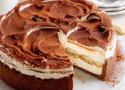
- You’ll have to cut the lady fingers to fit the cheesecake (see the photo above in the blog post).
- Then add the other half of the cheesecake filling and with an off-set spatula even it out.
- Cover the springform with cling film and place it in the refrigerator for a minimum of 8 hours.
Decoration
- Move the cheesecake to a serving dish.
- Whip together heavy cream, powdered sugar and vanilla paste until stiff peaks.
- Add it on top of the cheesecake and place it back in the refrigerator.
- Once ready to serve, dust it with cocoa powder.

Base Macaronnade Amandes & Noisettes
Ingrédients
- 80 g de blancs d'oeufs (= 2 gros blancs)
- 50 g de sucre semoule
- 60 g de sucre glace
- 40 g de poudre d'amandes
- 30 g de poudre de noisettes
- quelques noisettes hachées
Instructions
- Préchauffer le four à 200°
- Poser le cercle à entremets (24cm de Ø) sur une plaque à pâtisseries recouverte d'une feuille de papier cuisson.
- Monter les blancs d'oeufs en neige et les serrer avec le sucre semoule.
- Dans un saladier, mélanger le sucre glace avec les poudres d'amandes et de noisettes. Ajouter la meringue et mélanger délicatement à l'aide d'une maryse pour ne pas la faire retomber.
- Verser l'appareil dans le cercle à entremets et bien l'égaliser à l'aide d'une spatule. Saupoudrer de noisettes hachées.
- Cuire 10 min à 200°
- Retirer du four et laisser tiédir sans toucher.
- Une fois le biscuit refroidi, le décoller délicatement du cercle et le réserver dans un récipient hermétique pour éviter qu'il ne dessèche.
Fondant aux Pommes poêlées
Ingrédients
- 1 kg de pommes
- 50g de cassonade
- 1 sachet de sucre vanillé
- 2 cuillères à soupe de Calvados
- 40g de beurre ½ sel
- 3 œufs
- 6cL de crème liquide
- 1 cuillère à soupe de fécule
Instructions
- Baisser le four à 180°
- Éplucher et couper en morceaux les pommes (sucrées, acidulées et croquantes: j'ai utilisé des Melroses).
- Les faire caraméliser avec la cassonade, le sucre vanillé et le Calvados.
- Ajouter alors le beurre mou et coupé en parcelles.
- Couvrir et laisser cuire 15 à 20 min.
- Découvrir et laisser refroidir.
- Dans un saladier, mélanger les œufs entiers avec la crème, 2 cuillères à soupe du jus de cuisson des pommes et la fécule.
- Égoutter les pommes et les répartir dans le moule à génoise (22cm de Ø), recouvrir de l'appareil.
- Cuire 40 min à 180°.
- Laisser tiédir et démouler délicatement. Réserver sur une grille et au frais.
Sablé Breton
Ingrédients
- 60g de sucre semoule
- 30g de jaunes d’œuf (= 2 jaunes d'oeufs)
- 70g de beurre ½ sel
- 95g de farine
- 4g de levure chimique
Instructions
- Blanchir les jaunes avec le sucre au fouet et incorporer le beurre très mou.
- Ajouter la farine tamisée avec la levure chimique en mélangeant le moins possible, on obtient une pâte assez collante.
- Entreposer 30 min au réfrigérateur, la pâte va se raffermir et sera ainsi plus facile à étaler.
- Abaisser la pâte au centre du cercle (20cm de Ø).
- Cuire 25 min à 180°, le sablé doit rester blond.
- Laisser refroidir.
Mousse au Caramel & copeaux de chocolat
Ingrédients
- 100g de sucre en poudre
- 20g de beurre salé
- 8g de gélatine en poudre (= 4 feuilles)
- 20 + 40 cL de crème fleurette
- 50g de copeaux de chocolat noir
Instructions
- Ramollir la gélatine dans un grand volume d’eau froide.
- Mettre le sucre dans la casserole et le laisser cuire "à sec" en caramel en remuant de temps en temps pour éviter qu'il ne brûle.
- Le décuire avec le beurre coupé en parcelles et les 20 cl de crème. Remuer, incorporer la gélatine ramollie et essorée et laisser chauffer quelques minutes encore sans cesser de remuer.
- Laisser tiédir.
- Fouetter les 40 cl de crème en chantilly pas trop ferme, juste de quoi obtenir un bec souple.
- Incorporer 2 c à s de crème fouettée à la sauce caramel et remuer sans précaution pour détendre l'appareil. Ajouter le restant de la crème fouettée et l’incorporer cette fois-ci délicatement à l’aide d’une spatule.
- Ajouter finalement les copeaux de chocolat.
Montage
- Positionner le cercle à entremets sur un plat de service.
- Placer en 1er la base macaronnade aux amandes & noisettes, recouvrir du fondant aux pommes poêlées et finalement du sablé breton.
- Couler la mousse au caramel & copeaux de chocolat.
- Lisser et réserver au frais 4 à 5 heures.
- Décercler le plus délicatement possible et décorer (fils de caramel & disques de chocolat noir).
Ingrédients
- 200g de farine
- 150g de miel
- 100g de cassonade
- 100g de beurre
- 1 cuillerée à soupe de mélange « spécial pain d'épices »
- 1 sachet de levure chimique
- 1 sachet de sucre vanillé
- 1 tasse de lait
- 1 œuf
- 1 pincée de sel
Instructions
- Allumer le four à 180°C.
- À feu doux dans une casserole, faire fondre le miel avec le beurre et le lait.
- Mélanger la farine, la levure et le sel dans un saladier.
- Ajouter la cassonade, le sucre vanillé et le mélange spécial pain d'épices.
- Verser le miel fondu petit à petit dans le saladier en remuant bien.
- Casser l'œuf dedans et mélanger à nouveau.
- Chemiser un mouler à cake.
- Verser la pâte dedans.
- Mettre au four pendant 45 minutes.
- Laisser refroidir et déguster !
Source : trouvé sur Facebook

Ingredients
- 2 cups sugar
- ⅔ cup cocoa
- 6 tablespoons flour
- 1 teaspoon salt
- 2 cups milk
- 2 tablespoons butter
- 2 teaspoons vanilla
Instructions
- Mix dry ingredients together well.
- Add milk and cocoa.
- Heat until thick, stirring constantly.
- Add butter and vanilla and whisk until melted.
- Serve warm

J'ai découvert cette recette chez mon amie -M-. Très bon !
Ingredients
Brown Sugar Crumble
- 1 cup (132g) all purpose flour
- ½ cup (105g) light brown sugar, packed
- ½ cup (100g) granulated sugar
- 1 tsp ground cinnamon
- Pinch of kosher salt
- ½ cup unsalted butter, melted
Blueberry Sour Cream Coffee Cake
- 1½ cups (195g) all purpose flour
- 1 tsp baking powder
- ¼ tsp baking soda
- ½ tsp kosher salt
- 6 tbsp unsalted butter, room temp
- ¾ cup (150g) granulated sugar
- 1 large egg, room temp
- ½ tsp vanilla extract
- Scant ¼ tsp almond extract (optional)
- ¾ cup (185g) sour cream, room temp
Blueberries
- 2 cups (270g) fresh blueberries (see notes for frozen instructions)
- Zest of 1 lemon
- 1 tbsp cornstarch
Lemon Icing (optional)
- ½ cup (55g) powdered sugar
- ½ tbsp milk
- ½ tbsp lemon juice
Instructions
Brown Sugar Crumble
- In a medium bowl, whisk together all of the dry ingredients.
- Pour in the melted butter and mix to combine. It should be evenly moistened with a mix of large and small clumps.
- Place in the refrigerator while we make the batter.
Blueberry Sour Cream Coffee Cake
- Preheat the oven to 350°F and grease and line the bottom of a 9″ springform pan.
- In a medium bowl, whisk together the flour, baking powder, baking soda, and salt. Set aside.
- In a large mixing bowl using a hand or stand mixer with the paddle attachment, mix together the butter and sugar until light and fluffy.
- Then mix in the egg and extracts, followed by the sour cream.
- Before mixing in the dry ingredients, first prep the blueberries.
- Place the clean blueberries in a bowl and toss with the zest. Then toss with the cornstarch.
- Now back to the batter. Mix in the dry ingredients and just before it’s all combined, add in half of the blueberries.
- Switch to a rubber spatula and mix in the berries by hand, careful not to break them. The batter will also be VERY thick.
- Spread the batter in the bottom of the prepared pan and top with an even layer of the remaining blueberries.
- Top with a layer of the chilled crumble and bake for 45-50 minutes, or until a toothpick in the center comes out clean with a few moist crumbs.
- Allow the cake to cool for about 1 hour at room temperature.
- For the icing, whisk together all of the ingredients and drizzle over the cooled cake.
- Now slice and enjoy!
Ingredients
- 1+½ cup (260g) dark chocolate, melted
- 1 cup boiled rice
- ½ hot water
- Cocoa powder, for dusting
Process
- Begin by melting dark chocolate in the microwave, heating it in 30-second intervals until it is completely melted.
- In a blender, combine cooked rice, boiled water, and the melted dark chocolate. Blend until you achieve a smooth, velvety mousse like texture.
- Pour the mixture into a bowl and refrigerate it for 2 hours until it sets.
- Once the pudding is set, dust the top with cocoa powder and enjoy!

Ingrédients
- 400 g fromage frais Philadelphia nature à température ambiante
- 400 g mascarpone à température ambiante
- 200 g sucre en poudre
- 5 oeufs à température ambiante
- 320 g crème liquide entière 30%mg à température ambiante
- 26 g maïzena
- 1 cs extrait naturel de vanille
Préparation
- Préchauffer le four à 225° chaleur traditionnelle (non tournante). Beurrer légèrement un moule à charnière de 20cm de diamètre. Découper deux grands carrés de papier cuisson (environ 30-40cm de côté). Disposer le premier papier dans le moule : il va adhérer grâce au beurre. Il y aura des plis sur les côtés ce n'est pas grave, ça donne le charme au cheesecake. Disposer le second papier cuisson pour éviter tout écoulement. Les papiers doivent dépasser de 3cm minimum au dessus du moule.
- Dans un large récipient, mélanger le philadelphia et le mascarpone pour les détendre. Ajouter le sucre et mélanger pendant 3 minutes.
- Ajouter les oeufs un à un en fouettant entre chaque pour bien les incorporer (j'utilise mon batteur électrique pour cette recette, voir matériel ci-dessus).
- Tamiser la maïzena puis incorporer à la pâte en fouettant environ 2 minutes : il ne doit pas y avoir de grumeaux.
- Enfin, verser la vanille, puis la crème liquide en filet tout en fouettant pour avoir un mélange final bien lisse.
- Verser la pâte dans le moule préparé. Taper le fond du moule contre le plan de travail pour éliminer le maximum de bulles d'air.
- Enfourner environ 40-45 minutes : cela dépend beaucoup de votre four. Il faut que le dessus soit bruni (pas noir non plus). Il va gonfler un peu sur les côtés mais ça retombera ensuite. Le centre du cheesecake doit bouger comme un flan : on a l'impression que ce n'est pas cuit, mais c'est suffisant pour une texture crémeuse à la dégustation. Plus on le cuit, moins il sera crémeux.
- Hors du four, déposer le moule sur une grille pour refroidissement. Placer ensuite au moins 4 heures au réfrigérateur (non couvert) pour qu'il prenne sa texture finale (une nuit c'est bien aussi).
C'est super bon, très facile. Le rapport temps passé vs résultat est très favorable. À refaire !


Ingrédients
Cette recette maison n’utilise pas de grué ou de beurre de cacao, mais directement du chocolat. Nous vous proposons d’utiliser du chocolat au lait Jivara 40 %, mais vous pouvez aussi opter pour un chocolat noir pour un gianduja plus cacaoté.
Vous aurez donc besoin des ingrédients suivants :
- des noisettes entières ou mondées, éventuellement mélangées à d’autres fruits à coque
- du sucre en poudre
- du chocolat au lait ou noir
Prévoyez si vous le souhaitez de l’extrait naturel de vanille ou une pointe de sel.
Pour votre premier essai, nous vous conseillons d’utiliser la même quantité de fruits secs, de sucre et de chocolat. Vous pourrez par la suite jouer sur les proportions pour obtenir un gianduja adapté à votre goût et à l’utilisation que vous souhaitez en faire.
Torréfaction
La préparation du gianduja maison commence par la torréfaction des noisettes. Nous retrouvons ici les mêmes étapes que pour le praliné :
Mettez votre four à préchauffer à 140 ou 150 °C (thermostat 5).
Sortez la plaque du four et recouvrez-la d’une feuille de papier sulfurisé sur laquelle vous disposerez vos fruits à coque.
Enfournez vos fruits secs pendant 10 à 20 minutes pour les torréfier.
Remuez-les de temps en temps pour une torréfaction homogène.
Sortez vos fruits à coque du four et placez-les sur une surface froide.
Broyage
Si vous utilisez des noisettes mondées, vous pouvez passer au broyage. Dans le cas contraire, vous allez devoir retirer la peau des noisettes. Pour cela, nous vous conseillons de les placer dans un torchon pour les frotter les unes contre les autres. Cela vous évitera de vous brûler les mains.
Placez à présent les noisettes torréfiées encore chaudes et le sucre glace dans votre mixeur. Vous allez devoir mixer jusqu’à l’obtention d’une pâte bien lisse, ce qui peut prendre 10 à 15 minutes. Pensez à faire des pauses si votre robot commence à chauffer.
Cuisson
Parallèlement au broyage, vous devrez faire fondre le chocolat auquel vous intégrerez ensuite le reste des ingrédients.
Commencez par faire fondre le chocolat que vous avez choisi au bain-marie.
Une fois le mélange de noisettes et de sucre suffisamment mixé, versez-le dans le chocolat fondu.
Remuez le tout en vous assurant d’obtenir une texture lisse et homogène.
Passez éventuellement l’ensemble au mixeur si nécessaire.
Refroidissement
Pour faire refroidir le mélange de noisettes, sucre et chocolat, versez-le dans un plat ou dans des moules en silicone. Placez-le ensuite au réfrigérateur pour bien lui laisser le temps de refroidir. Laissez refroidir votre gianduja pendant au moins quatre heures.
Vous pourrez ensuite démouler votre gianduja ou le découper en petits cubes si vous avez utilisé un grand plat. Comme pour les pralinés, conservez-le à l’abri de la lumière et de la chaleur, de préférence dans un récipient hermétique que vous pourrez conserver au réfrigérateur.